
What the monsoon teaches about brick, stone and a home's foundations
Watch how rain moves around your house, learn the signs of tired mortar and cracks, and know what to ask a masonry contractor.
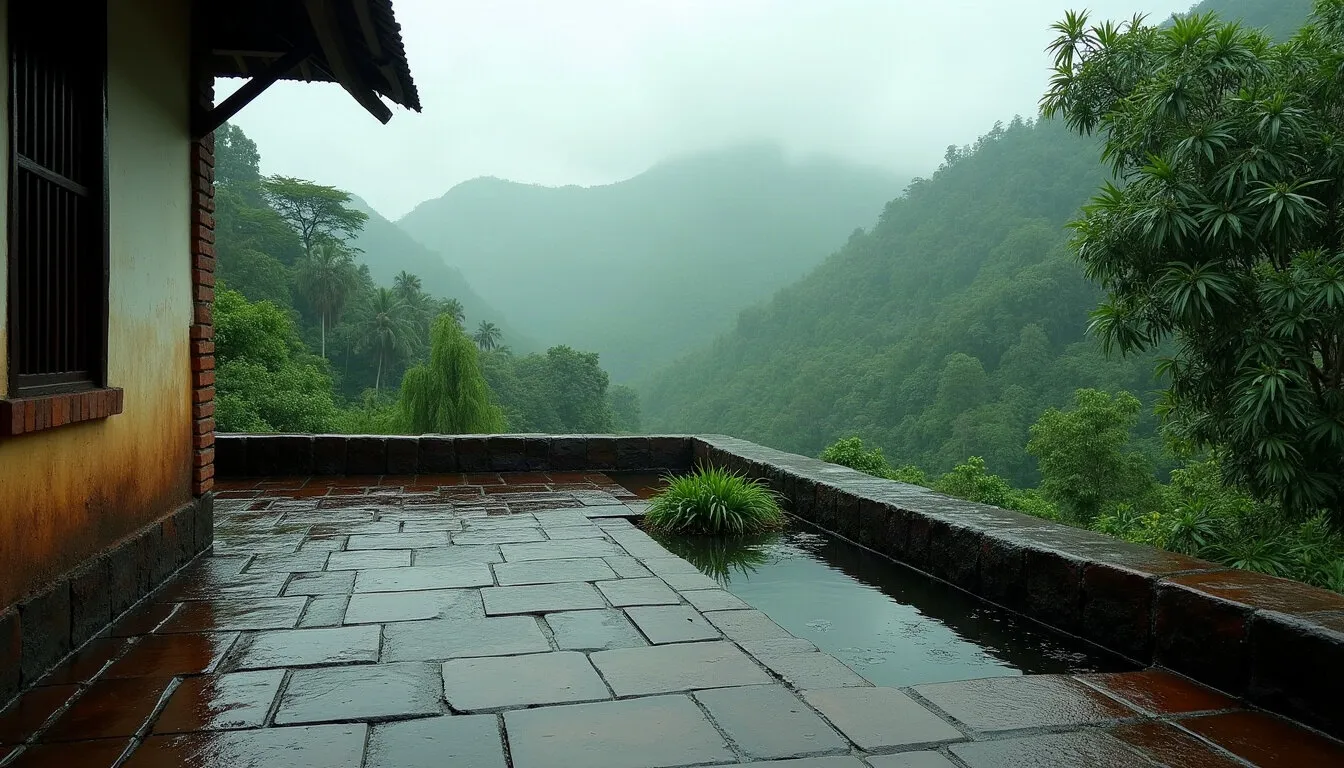
The veranda of an old hill house near Kumily has a low wall of dressed stone, and after a night of monsoon rain it darkens from the bottom up, like a cloth dipped in water. By noon the top dries pale again while the base stays wet for days. Anyone who grew up in such a house learns to watch that line.
Back home, a brick or stone house tells you just as much if you know where to look. What should you ask Nashville general masonry contractors when a crack appears in a wall, a step starts to lean or the driveway splits after a wet spring? This piece is about reading a house the way hill families read theirs, so you go into that conversation knowing what you have seen.
Watch how water moves around the house
Every masonry problem I have ever noticed began as a water problem. In the hills, the houses that lasted were the ones whose builders understood rain: deep eaves to throw it clear, a raised plinth to keep the walls off the wet ground, and a slope in the courtyard that sent water away from the kitchen rather than towards it. The houses that cracked and stained were usually the ones where water had been allowed to sit.
A brick or stone home in a humid, stormy city works on the same rules. Stand outside during a heavy shower, with an umbrella and a little patience, and watch. Where does the water off the roof land? Does it pool against the base of a wall, run across a path, or collect in a low corner of the patio? Do downpipes empty straight onto soil next to the foundation? These are the habits that, over years, soften mortar, wash out the soil under a slab and push walls slightly out of true.
Once you have watched a storm, you will start to notice the dry-day evidence too: a dark tidemark on brick, green growth in a shaded corner, a gap opening between a step and the wall it once met.
Field marks
- water pooling against a wall or foundation after rain
- downpipes emptying onto soil right beside the house
- dark tidemarks, moss or white powdery deposits low on brick or stone
- paths and patios that slope towards the house instead of away
Learn the field marks of tired masonry
Brick and stone are patient materials, but the mortar between them is the part that ages. In the hill houses, the old lime mortar would crumble a little every monsoon and get pointed again in the dry months, as regularly as the roof tiles were checked. Nobody thought of it as a repair; it was simply what you did.
In a modern home, look closely at the joints. Mortar that rubs away under your thumb, joints that have hollowed back from the face of the brick, or bricks whose faces have flaked off are all signs that water is getting in and freezing, drying, and getting in again. White powdery deposits, often called efflorescence, show where moisture is moving through the wall and leaving salts behind.
Cracks deserve the most attention, and they are also where a homeowner should stop guessing. Fine hairline cracks in mortar are common. Cracks that follow a staircase pattern through the joints, cracks that are wider at one end than the other, or cracks that reappear after being filled can point to movement underneath. That is a question for a professional, not for a tube of filler.
Field marks
- mortar that crumbles, hollows back or rubs away under a fingertip
- flaking brick faces, especially low on the wall or under windows
- stepped cracks through the mortar joints
- doors and windows that start to stick in walls that were once square
Know the season before you start
On the ridge, the dry months after the north-east monsoon were the time for building work. You could see what the rains had done, the mortar would set properly, and nobody wanted scaffolding up when the clouds came back. Planning around the weather was not fussiness; it was the difference between a repair that lasted and one that washed out.
Middle Tennessee has its own rhythm of hot, humid summers, cooler winters and spells of heavy rain, and masonry and concrete work both care about the weather. Very wet or very cold conditions affect how mortar and concrete cure. A good contractor will talk to you about timing and will not rush a pour or a repointing job into a week of bad weather just to fit a schedule.
The useful habit is to make your notes during the wet season, when problems show themselves, and to plan the work for when conditions suit it. Photograph cracks with a coin or a pencil beside them for scale, and take the same photograph a few months later. That simple record is often more useful to a professional than any description.
What to ask before the work begins
Foundation movement, leaning walls, retaining walls and structural cracks are all work for licensed professionals. I have watched enough well-meaning repairs in the hills, patched over with fresh cement that trapped the damp behind it, to know that the wrong fix can make an old wall worse. Your part is to notice, record and ask.
When you speak to a contractor, these are the questions I would want answered:
| Question | Why it matters |
|---|---|
| What do you think is causing this? | A good answer starts with water, soil or movement, not just the crack itself. |
| Is this cosmetic, or a sign of something underneath? | It separates repointing from foundation work. |
| What will you check before quoting? | Inspection should come before any price. |
| How will water be kept away from this area afterwards? | Without that, the same problem tends to return. |
| What timing do you recommend, given the weather? | Mortar and concrete need suitable conditions to cure well. |
A good contractor will walk the whole house with you, not just the spot you pointed at, and explain what they see in plain language. They will tell you which problems can wait and which should not. If foundation repair is needed, they will explain what it involves in general terms and what the work will look like on the ground.
Field marks
- a contractor who asks about drainage and gutters, not only the crack
- a clear explanation of cause before any talk of cost
- honesty about what can wait and what cannot
- attention to the driveway, paths and steps around the house as well
Look after the ground around the house
The prettiest hill homes I remember had courtyards of beaten earth or old stone, swept every morning, with a shallow channel along one edge to carry the rain away. The ground around the house was treated as part of the house.
The same thinking protects a brick home, a concrete patio and a driveway. Keep gutters clear so they do not overflow onto the walls. Extend downpipes so they discharge away from the foundation. Keep soil and mulch beds sloping away from the house rather than heaped against it. Trim back shrubs that hold damp against brick, and watch for tree roots close to paths and slabs. Small cracks in a driveway let water in under the surface, so it is worth having them looked at before a hard season widens them.
None of this replaces professional repair, but it slows the conditions that make repair necessary. It is the same quiet care that kept the old verandas standing through decades of rain.
Before the next rains
This season, walk around your home after a heavy shower and note where water lands and where it lingers. Photograph any cracks in walls, steps or the driveway with something beside them for scale, and if any of them are stepped, widening or new, ask a masonry or foundation professional to take a look while the weather is still kind.
A house, like a stone wall on a hill veranda, will tell you what it needs if you watch it through one wet season.

Biju Abraham
Biju spent his childhood between Kumily and the cardamom estates further up the ridge. He writes about spice and tea country, hill towns, food and the people who live at the forest edge.
More from the same habitat

Photographing wildlife in rainforest light
Camera settings, focus habits and lens care for photographing birds and animals under a dark evergreen canopy and from a boat on a humid Western Ghats lake.