
Home › Guides
Guide
Wildlife of Periyar: a visitor's overview
Evergreen forest, grassland and a drowned-valley lake: which mammals, birds, reptiles, frogs, fish and butterflies live at Periyar, and where to notice them.
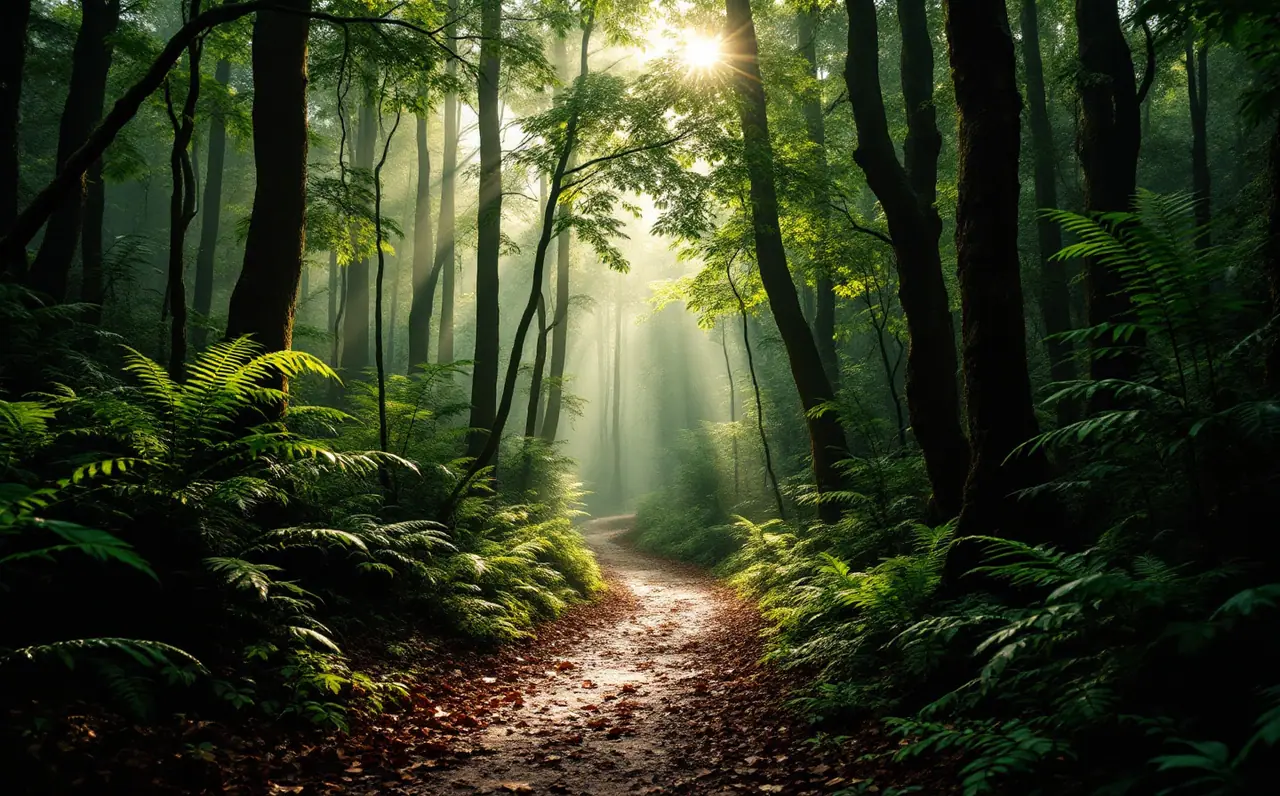
Periyar is famous for elephants on the lake shore and for being a tiger reserve, but the animals most visitors actually spend time with are smaller and more varied: langurs crashing through the canopy, a darter drying its wings on a stump, a birdwing butterfly sailing over a clearing, a frog calling from a ditch after rain. The reserve sits in the southern Western Ghats, one of the richest mountain ranges in Asia for plants and animals found nowhere else, and it holds a fair share of them.
This page is an overview for visitors from the journal's writers, who are travellers, birders and readers of field studies rather than scientists. It describes the habitats first, because where you are decides what you see, then runs through the main groups of animals and plants. Where we give a number, we name the source. Species lists grow as more people look, so treat any count as a snapshot rather than a final word.
Habitats, from lake to ridge
The reserve covers roughly 925 square kilometres and climbs from deep river valleys in the west to ridges around 2,000 metres. That range of height and rainfall produces a patchwork of habitats within short distances. According to the National Tiger Conservation Authority's note on the reserve, tropical evergreen forest is the largest vegetation type, covering about 38 percent of the area, with semi-evergreen forest and grassland each covering more than a quarter.
Evergreen and semi-evergreen forest
Tall, dense, many-layered forest that stays green all year, with buttressed trunks, climbers, epiphytic orchids and ferns. It is cool and dim inside. Much of the reserve's endemic life, from lion-tailed macaques to many frogs, depends on it. Semi-evergreen forest mixes evergreen trees with some that drop their leaves in the dry months, and often forms the transition to more open country.
Moist deciduous forest
More open forest, much of it on the eastern and lower slopes, where many trees shed leaves in the dry season. Light reaches the ground, grass and shrubs grow underneath, and large herbivores such as gaur and sambar find more to eat. Seeing into it is easier than in evergreen forest, especially from December to April.
Grasslands
Open grassy slopes and clearings, some maintained by fire and grazing over long periods. On the highest ground there are montane grasslands with small patches of shola forest in the folds, the kind of country described in the piece on Nilgiri tahr and the shola grasslands. Lower down, grassy clearings in the forest are good places to scan for deer and gaur at dawn and dusk.
The lake and its marshes
The lake formed behind the Mullaperiyar dam, completed in 1895, flooding forested valleys. Its long, folded shore and the grassy margins that appear as the water drops are the most reliable places in the reserve to see large mammals in the open. Marshy patches, known locally as vayals, add wet grassland, frogs, dragonflies and wading birds.
Plantations at the edge
Outside the boundary, cardamom grows under shade trees, pepper climbs their trunks, and tea covers the higher slopes towards Vandiperiyar and Peermade. Shade-grown cardamom in particular keeps a tree canopy that many forest birds use, which is why birding along a plantation road (with permission) can be so rewarding. Old eucalyptus plantations inside the reserve, left from earlier forestry, are poor habitat by comparison.
Mammals
The National Tiger Conservation Authority's note on Periyar records 66 species of mammals, seven of them endemic to the Western Ghats. Here are the ones visitors most often ask about.
The large animals
The tiger is the reserve's reason for being a tiger reserve, but it is rarely seen in this dense forest. Leopards share the forest with it and are, if anything, even more secretive. The dhole, or Asian wild dog, hunts in packs and is listed as Endangered by the IUCN; a pack crossing a track is one of the more exciting sights a lucky visitor can have.
The Asian elephant is the animal most people see, usually on the lake shore in family groups of females and young. Periyar's elephants have a particular history of ivory poaching that removed many adult males, explained in the piece on watching elephants at Periyar. Gaur, the largest wild cattle, graze on the shore and in clearings, often in herds. Sambar, a big, dark deer with a loud alarm honk, and the small barking deer, which gives a sharp, dog-like call, are the main deer. Wild boar are common. Sloth bears are present but mostly active at night.
Primates and squirrels
The Nilgiri langur, black with a pale brownish hood, is the monkey you are most likely to hear first: a deep, gruff call from the canopy, often an alarm. The lion-tailed macaque, dark with a silver-grey mane and a tufted tail, is a Western Ghats endemic listed as Endangered by the IUCN; it lives in tall evergreen forest and is a real prize. Bonnet macaques are the familiar monkeys of roadsides and town edges. The Malabar giant squirrel, a large squirrel in rich maroon, brown and cream, gives a loud, rattling call and leaps between canopy trees.
Rarer and harder to see
The Nilgiri marten, a Western Ghats endemic and the only marten in south India, is a dark, agile predator of the canopy and is seldom seen. Smooth-coated otters live in the lake and are sometimes spotted from the water. The Nilgiri tahr, the mountain goat of the high grasslands, occurs in small numbers on remote high ground in the reserve, far from the visitor area; if seeing one matters to you, plan a day in the Munnar hills instead.
Birds
Bird counts for Periyar differ by source. Kerala Tourism gives around 265 species recorded in Periyar, migrants included, while the National Tiger Conservation Authority's note puts the total at more than 342. The difference is a good example of how lists grow with effort and with how widely "Periyar" is drawn. BirdLife International lists the reserve as an Important Bird Area.
The great hornbill, huge and black and white with a yellow casque, is the bird many visitors hope for, and its loud, whooshing wingbeats often announce it before you see it. The smaller Malabar grey hornbill is far more common. Western Ghats endemics include the Malabar parakeet, white-bellied treepie, crimson-backed sunbird and Malabar grey hornbill. The Sri Lanka frogmouth, a cryptic nocturnal bird that roosts by day in thick cover, is a speciality that local guides sometimes know roosts of. On the lake, darters, little and great cormorants, kingfishers and egrets are everywhere, and raptors such as the crested serpent eagle and the brahminy kite hunt along the shore.
For where to look and fifteen species to learn first, see birding around Thekkady for beginners. The eBird page for Idukki district shows what other birders have recorded month by month.
Reptiles and amphibians
The king cobra, the longest venomous snake, lives in the evergreen and semi-evergreen forest and is listed as Vulnerable by the IUCN. It is shy and usually moves away from people. Other snakes recorded include the Malabar pit viper, a variable, often green or brown snake of wet forest, and the striped coral snake. Lizards range from the flying lizard (Draco), which glides between tree trunks, to monitors near water. Never approach or try to photograph a snake closely, and leave any identification of a snake that matters to your guide.
Frogs are where the southern Western Ghats really stand out, with a large share of species found nowhere else. Around Periyar look and listen for the Malabar gliding frog, a green tree frog with broad webbed feet that lets it glide between branches, bush frogs that call from shrubs at dusk, and leaping frogs on wet rocks by streams. The purple frog, a burrowing species that surfaces briefly to breed in the monsoon, was first described from Idukki district. Most frogs are easiest to find after rain, which is part of the case for a monsoon visit.
Fish of the lake and streams
The lake and its feeder streams hold an unusual fish fauna. A 2010 paper by K. V. Radhakrishnan and B. Madhusoodana Kurup in the Journal of Threatened Taxa recorded 54 species in the reserve, several endemic to it, including the Periyar barb (Hypselobarbus periyarensis) and the Critically Endangered Lepidopygopsis typus, sometimes called the Periyar trout. The same study found introduced fish, including common carp and Mozambique tilapia, alongside the native species. Visitors rarely see the fish themselves, but the cormorants, darters and otters that feed on them are a constant reminder that they are there.
Butterflies and other insects
Published checklists put Periyar's butterflies well over a hundred species. The southern birdwing, a huge black and golden-yellow swallowtail, is the one that makes people stop. The Malabar tree nymph, with large white papery wings, floats over clearings, and the Malabar banded peacock, Kerala's state butterfly, flashes green-blue on wet mud. The Travancore evening brown, a rare endemic linked to reed bamboo, was rediscovered in Periyar in 1993 and is seldom seen. Puddling groups on damp sand by streams are the best place for a beginner to compare species, and the starter list of butterflies covers ten to learn first. Dragonflies and damselflies are also rich here, especially around the lake and marshes.
Plants
Periyar's plant list is long. The National Tiger Conservation Authority's note counts 1,985 species of flowering plants, 519 of them endemic to the southern Western Ghats, and names three plants known only from the reserve: Syzygium periyarensis, the orchid Habenaria periyarensis and Mucuna pruriens thekkadiensis. Orchids, many of them small epiphytes on tree branches, and a great variety of grasses add to the diversity, and reed bamboo brakes in the wetter valleys matter to several animals. Invasive plants such as Lantana camara and Mikania micrantha have spread along roads and disturbed edges, one of the reserve's quieter management problems.
What to look for, and where
| Group | Examples | Where and when you are most likely to notice them |
|---|---|---|
| Large herbivores | Asian elephant, gaur, sambar, wild boar | Lake shore and grassy clearings, early morning and late afternoon, most often in the drier months from about February to May |
| Predators | Tiger, leopard, dhole | Rarely seen; tracks, scat and alarm calls on forest trails are far more likely than the animal |
| Primates | Nilgiri langur, lion-tailed macaque, bonnet macaque | Langurs heard in the canopy through the day; lion-tailed macaques in tall evergreen forest; bonnets near roads |
| Squirrels and small mammals | Malabar giant squirrel, smooth-coated otter | Squirrels in tall trees, mornings; otters along the lake edge |
| Forest birds | Great hornbill, Malabar grey hornbill, Malabar trogon, mixed flocks | The first two to three hours after sunrise, inside forest and along plantation roads |
| Water birds | Darters, cormorants, kingfishers, egrets | Lake stumps and shallows all day; busiest early and late |
| Reptiles | King cobra, Malabar pit viper, flying lizard | Seldom seen; flying lizards on sunny tree trunks; snakes best left to guides to point out |
| Frogs | Malabar gliding frog, bush frogs, leaping frogs | Wet nights and dusk in the monsoon months, around ditches, streams and marshes |
| Fish | Periyar barb, introduced carp and tilapia | Rarely seen directly; watch the birds and otters that feed on them |
| Butterflies | Southern birdwing, Malabar tree nymph, Malabar banded peacock | Sunny mid-mornings, especially after the monsoon from about October to January, at flowers and wet sand |
| Endemic plants | Orchids, reed bamboo, Syzygium periyarensis | Evergreen forest and wet valleys; orchids flower mostly in and after the rains |
Watching well
Almost everything above is easier to see if you move slowly and quietly, start early and give animals room. Follow the instructions of the guide on any walk or boat trip inside the reserve without argument; they are watching for elephants, gaur and weather in ways a visitor cannot. Activities, their timings and the rules attached to them are set by the reserve and change, so check the reserve's official website or the counter in Thekkady for current details.
The single habit that teaches the most is keeping a notebook: what you saw, where, at what time and how you knew. After a few days you will find that the forest's rhythm, langurs at dawn, butterflies at mid-morning, elephants coming down to the water in the late afternoon, tells you where to look next.