
Birding around Thekkady for beginners
Where to look, when to go out and fifteen birds worth learning first around Thekkady and Kumily, from lake-edge darters to the Malabar trogon in the forest.
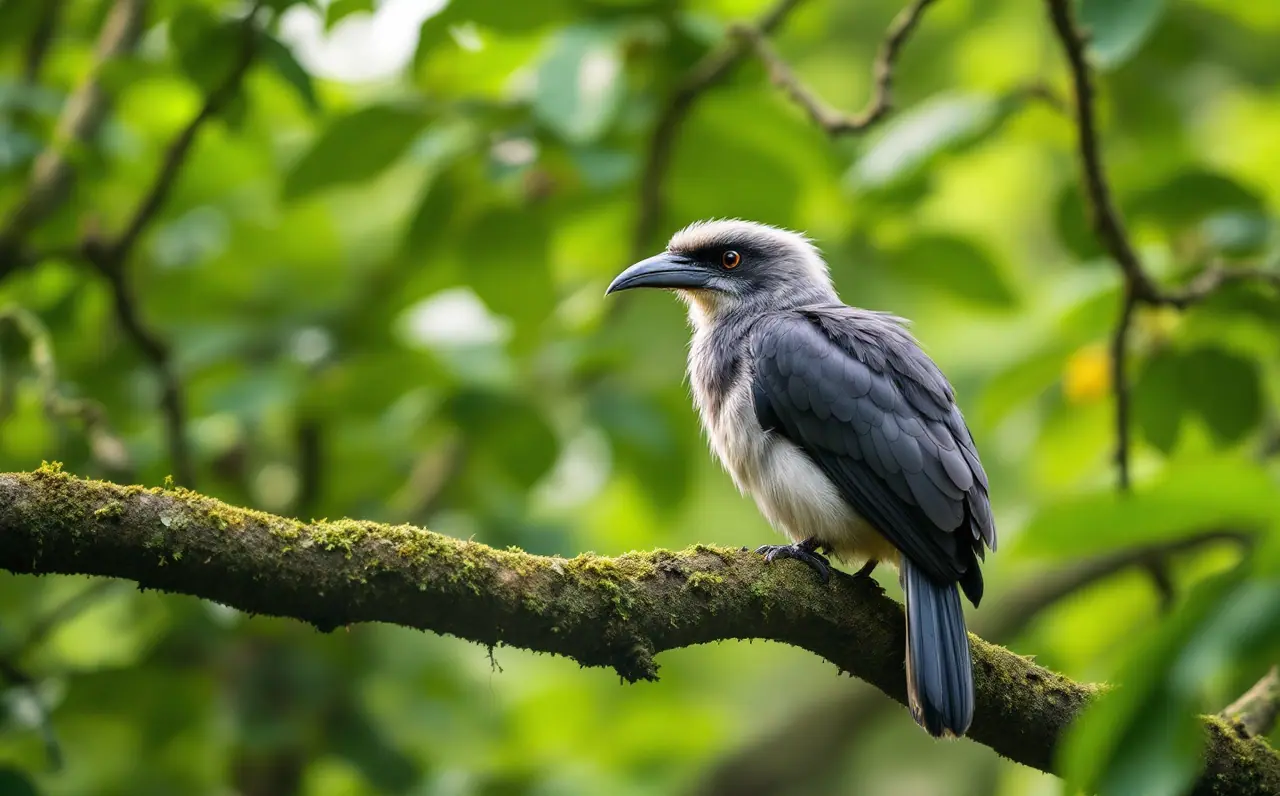
The first bird list I ever kept started on a school trip to Thattekad, and most of the names on it were wrong. I had a borrowed pair of binoculars, a photocopied page from a field guide and the confidence of a twelve-year-old. What fixed it, slowly, was going back to the same common birds again and again until I knew them by shape and voice before I knew them by colour. Thekkady and Kumily are a very good place to learn birds that way. The forest of Periyar comes right up to the edge of town, the lake brings in water birds, and the spice gardens and homestay compounds between them hold birds that will happily sit in a guava tree while you work out what they are.
This piece is for someone arriving with little or no experience. It covers the habitats worth walking, how the day changes, fifteen birds to learn first, the apps that help and the manners that keep birding pleasant for everyone, including the birds.
Four habitats within a short walk of each other
Thekkady sits on a plateau at the eastern edge of Kerala, and the reserve around it climbs from low river valleys to high ridges. According to Kerala Tourism, around 265 bird species have been recorded in Periyar, migrants included. You will not see a fraction of that in a few days, and you do not need to. It helps more to understand four kinds of place and what each one tends to hold.
The lake edge
The Periyar lake was created when the Mullaperiyar dam was completed in 1895, and the drowned forest left dead tree trunks standing in the water. Those stumps are perches. Darters and cormorants sit on them with wings held open to dry, kingfishers use them as lookouts, and egrets and herons work the shallows along the grassy margins. If you are new to birding, the lake is the gentlest start, because the birds are big, often still and out in the open.
Evergreen and moist deciduous forest
Away from the water the forest is a mix of tall evergreen and semi-evergreen stands and drier, more open moist deciduous patches. This is where the Western Ghats specialities live, and it is harder going. Birds are high in the canopy, the light is dim, and much of what you notice first is sound. Expect long quiet spells broken by a sudden rush of activity when a mixed flock passes.
Plantations
Cardamom grows under a shade canopy of native and planted trees, and pepper vines climb the trunks of others. That shade gives forest birds a reason to come out of the reserve. A walk along a plantation road (with the owner's permission, since nearly all of it is private land) can produce hornbills, barbets, flowerpeckers and bulbuls at eye level.
Town gardens and homestay compounds
Flowering shrubs bring in sunbirds, fruiting trees bring in bulbuls and barbets, and the lawn edge often has a white-throated kingfisher or a group of babblers turning over leaves. A cup of tea on a veranda at first light is a perfectly respectable birding session.
Mornings, afternoons and the long middle of the day
Forest birds are most active in the first two or three hours after sunrise. Calls carry, flocks move and birds feed before the heat sets in. By late morning the canopy goes quiet and it can feel as if the forest has emptied. It has not, the birds are resting in shade, and your time is better spent at the lake or with a field guide over lunch.
Activity picks up again in the late afternoon, though usually more gently than at dawn. This is a good time for the lake, when darters and cormorants return to their perches, and for garden birds coming to fruiting trees before dusk. Season matters too. Rain changes how birds behave and how far you can walk, and the dry months bring winter migrants into the mix. Sneha's piece on the best time to visit Thekkady walks through the months if you are still choosing dates.
Fifteen birds to learn first
These are not the rarest birds around Thekkady. They are birds a beginner can realistically find and, once learned properly, will keep recognising for life. Several are endemic to the Western Ghats.
| Bird | Field marks to look for | Where and when |
|---|---|---|
| Great hornbill | Huge, black and white, big yellow bill with a casque on top; wingbeats make a loud whooshing sound | Tall forest and fruiting fig trees; heard in flight before seen; mornings |
| Malabar grey hornbill | Smaller, plain grey hornbill with an orange-yellow bill and no casque; pale eyebrow; loud cackling call | Forest edge, plantations, even large garden trees; through the day |
| Malabar trogon | Sits upright and very still; male has a black head and breast, a white band across the chest and a crimson belly; female duller with an orange belly | Mid-level in shady forest; early morning; easy to walk past |
| White-bellied treepie | Long graduated tail, dark face, white belly and collar, rufous back | Forest and forest edge, often with mixed flocks; mornings |
| Crimson-backed sunbird | Tiny; male shows a deep red back and breast, glossy green crown and pale belly; female olive | Flowering shrubs in gardens and forest edges; any time flowers are open |
| Nilgiri flycatcher | Dusky blue-grey flycatcher of high country, with a paler belly | Shola forest edges on higher ridges, not the lake; mornings |
| Oriental darter | Long thin neck with a kink, dagger bill; swims with only the neck showing; dries wings on stumps | Lake stumps and shallows; morning and late afternoon |
| Little and great cormorant | Hooked bill, stockier neck than a darter; little cormorant is small and black, great cormorant larger with white on the face | Lake perches and open water; all day |
| White-throated kingfisher | Bright blue back, chocolate head and belly, white throat and chest, red bill | Lake edges, paddy margins, garden wires; all day, and very vocal |
| Greater racket-tailed drongo | Glossy black, crested, two long bare tail shafts ending in rackets; a gifted mimic | Forest mid-storey, often leading mixed flocks; mornings |
| Malabar whistling thrush | Dark blue-black thrush with a shining blue patch on the shoulder; rambling human-like whistled song | Streams, wet rocks, shaded gullies; dawn and dusk |
| Yellow-billed babbler | Grey-brown, pale bill and pale eye, moves in noisy groups that hop and scold | Gardens, plantations, scrub; all day |
| Brown-cheeked fulvetta | Small, plain brown with a grey head and a pale eye ring; restless | Forest undergrowth and lower canopy, usually in flocks; mornings |
| Malabar parakeet | Blue-grey parakeet with blue wings and a long blue tail tipped yellow | Flying over forest and plantations in small groups; mornings and evenings |
| Orange minivet | Male flame orange-red and black, female yellow and grey; travels in pairs or small parties | Canopy of forest and tall plantation trees; mornings |
A few notes on the tricky ones
The two hornbills are the first lesson in using size and sound. A great hornbill is enormous and its flight is audible, a heavy swish you can hear from a distance. The Malabar grey hornbill is much smaller and gives itself away with a cackling call that sounds a bit like laughter. If a hornbill is in a garden tree near a road, it is far more likely to be the grey one.
The Malabar trogon teaches patience. It sits motionless with its back to you, and the back is brown. People walk under trogons all the time. Scan horizontal branches at mid-height in shady forest and look for an upright shape that does not move.
Darters and cormorants are the second shape lesson. A darter has a long, thin, snaking neck and a pointed bill, and when it swims it can look like a snake on the water. A cormorant has a thicker neck and a hooked bill tip. Both sit with wings spread to dry because their feathers get wet, which is useful to know when you are looking at a dark shape on a stump at a distance.
Babblers are where beginners get stuck. The yellow-billed babbler is the familiar one in Kerala gardens, but jungle babblers also occur in parts of the region, and the two look very alike. Both live in chattering groups and are sometimes called "seven sisters" for that reason. Learn the group behaviour first, then look at bill colour, crown contrast and the eye when you get a clear view. Note it as "babbler sp." if you are unsure. Honest uncertainty beats a confident wrong name.
The Nilgiri flycatcher is the exception on this list, because it belongs to higher country. If your trip includes a drive up to the shola grasslands on the higher ridges, look for it along forest edges there rather than near the lake.
Mixed flocks
In the evergreen forest many small birds travel together in what Indian birders often call a bird wave. A drongo or a treepie may be loudly in front, with fulvettas, minivets, flycatchers, woodpeckers and warblers following. When a flock arrives, stop walking. Pick one bird, watch it until you have its shape and behaviour, and let the rest go. Trying to see everything at once usually means seeing nothing well.
Using eBird and Merlin without letting them do the work
Two free apps from the Cornell Lab of Ornithology are useful here. Merlin suggests identifications from a photo or a description, and its Sound ID listens to calls through your phone. Download the bird pack that covers India before you travel, because mobile signal in the forest is patchy at best. Treat its suggestions as a starting point. Sound ID sometimes picks up a call, a mimic or a distant bird and offers a confident name that is wrong. The greater racket-tailed drongo, which imitates other birds freely, is a good test of your scepticism.
eBird is where birders record what they see. Before you go, the eBird page for Idukki district shows recent sightings and hotspots, which is a realistic guide to what is around in a given month. When you submit your own checklists, count the birds you are sure of and leave out the ones you are guessing at. Local reviewers flag unusual records, and that system works only if people are careful.
Guided walks and the rules that come with them
Visitors see the inside of the reserve mostly through organised programmes, and several of these are nature walks or birding walks led by local guides from the forest-edge communities. Many of those guides know calls and roosts that would take a visitor years to learn. Timings, group sizes, fees and what is allowed are set by the reserve and do change, so check the reserve's official website or the counter in Thekkady for the current details rather than relying on a blog or an old review. Our guide to visiting Thekkady covers the town and its surroundings in more general terms, and the Periyar wildlife guide gives the wider picture of what lives in the reserve.
On any walk inside the reserve, follow the guide's instructions without argument. They are watching for elephants, gaur and weather in a way you are not.
Etiquette that makes a difference
- Do not play recorded calls to draw birds in, especially in the breeding season. It stresses territorial birds and pulls them away from nests.
- Keep your distance from nests and roosts. If a bird changes its behaviour because of you, you are too close.
- Stay on paths and roads. Plantations are private and the forest is not a place for shortcuts.
- Talk quietly, wear muted colours and turn your phone to silent. Other people are listening for the same birds.
- No flash on birds, and no throwing food to attract them.
- Share sightings generously with other visitors, but do not broadcast the location of nesting birds or sensitive species online.
If you only take one habit from this page, make it this one: write down what you saw the same day, with the place, the time and a note on how you identified it. A plain notebook entry such as "two Malabar grey hornbills, fig tree by the homestay gate, around 7 in the morning, cackling call" is worth more for learning than a hundred photographs you never look at again. More pieces on birds and butterflies of the region sit under birds and butterflies.

Arjun Pillai
Arjun grew up in Kottayam and has kept a bird list since a school trip to Thattekad. He writes the birding and butterfly pieces, mostly about learning to see the common species properly before chasing rare ones.
More from the same habitat
A starter list of butterflies in the southern Western Ghats
Ten butterflies to learn first in Kerala, from the southern birdwing to the rare Travancore evening brown, with families, puddling and gentle photography tips.