
Watching elephants at Periyar, from the lake shore to the forest edge
Why the Periyar lake shore is such a good place to see Asian elephants, how to read a herd's body language, and how people at the forest edge live beside them.
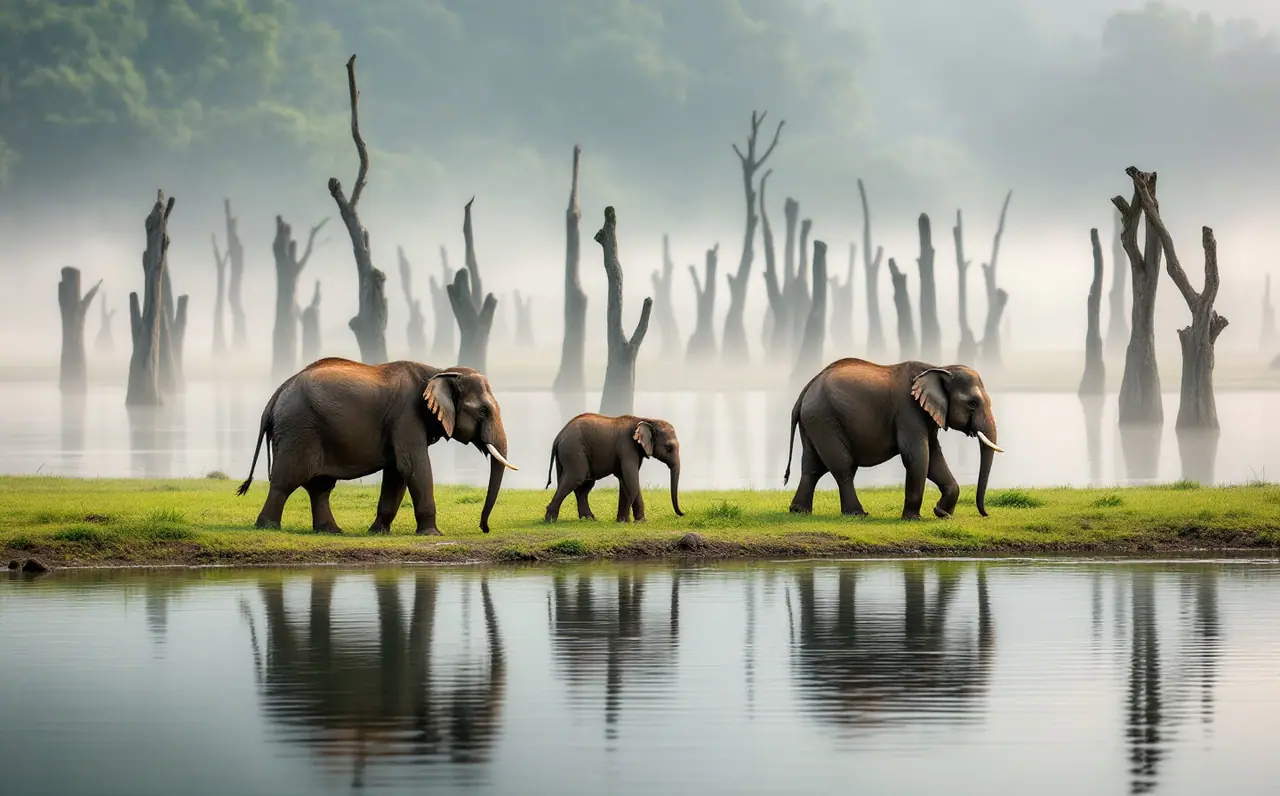
Ask anyone who grew up around Kumily what they remember about elephants and you rarely get a story about a tiger-spotting thrill or a photograph. You get a story about a banana grove flattened overnight, a school bus waiting on the road while a cow and her calf finished crossing, or the sound of firecrackers going off at the edge of a cardamom estate after dark. Elephants are the animals that people here live with, not just the animals visitors come to see. Both views matter if you want to watch them well.
This piece is about seeing Asian elephants around Periyar: why the lake is such a reliable place to find them, what a herd actually is, how to read the signals an elephant gives before it gets annoyed, and what a careful visitor does and does not do. I am not a guide or a biologist. I am someone from the edge of this forest who has spent a lot of time looking at elephants from a polite distance and listening to people who know them better.
Why the lake shore works
Periyar lake is not a natural lake. It filled behind the Mullaperiyar dam, completed in 1895, and the water drowned a stretch of forested valley. More than a century later you can still see the grey trunks of those trees standing in the shallows, bleached and branchless, with cormorants and darters drying their wings on top. The lake follows the old valleys, so its edge is long and folded, full of small bays and fingers of water reaching into the forest.
That edge is what makes elephant watching here so good. Where the water rises and falls through the year, the shore turns into strips of grass, and grass is what elephants eat in huge quantities. Water is close by for drinking and for bathing. The forest behind gives shade and cover. A herd can come out of the trees, graze along the bank, wade in, and slip back without going far. From the water, or from a viewpoint across a bay, you see them in the open, which is rare in dense evergreen forest where an elephant twenty metres away can be invisible.
Season changes the picture. In the dry months, when small streams and pools inside the forest shrink, more animals come down to the lake, and the exposed banks grow fresh grass as the water drops. In the monsoon the forest is full of water and green fodder everywhere, so herds have less reason to gather at the shore and the rain makes everything harder to see. If elephants are high on your list, the month-by-month notes in our guide to the best time to visit Thekkady are worth reading before you fix dates, and the monsoon piece explains what the wet months are good for instead.
Boat trips on the lake, guided walks and other activities inside the reserve are run under the reserve's own rules, which change from time to time. Check the reserve's official website or the counter in Thekkady for current timings and fees rather than trusting anything you read secondhand, including here.
What a herd really is
The group you see on the bank is usually made up of adult females, young animals and calves. They tend to be related: mothers, daughters, sisters, aunts and their young. Older writing describes a single wise matriarch leading the herd everywhere. Researchers now describe something looser, with related females forming small family units that join and separate over days and weeks, though older, experienced females still matter a great deal when the group has to decide where to go or how to react to danger.
Young males stay with the family until they reach their teens and then drift away or are pushed out. Adult bulls spend much of their lives alone or in loose, shifting company with other males. So when you see one big animal on its own at the water's edge, it is very likely a bull, and it deserves extra respect.
Periyar's elephants carry a particular history. A 1998 study by R. Sukumar and colleagues at the Indian Institute of Science modelled ivory poaching in Periyar over the two decades from 1974 and described an adult sex ratio skewed very heavily towards females, because poachers had targeted tuskers. In Asian elephants only males grow large tusks, and many males have none. When you do see a tusker on the shore, you are looking at the kind of animal this forest nearly lost.
Musth, in plain words
Adult bulls go through a period called musth, roughly once a year. Hormone levels rise sharply, the bull becomes restless and far less tolerant, and he is more likely to challenge other males or anything else that bothers him. The signs are easy to learn:
- a dark, wet streak running down the side of the face from a gland between the eye and the ear
- a steady dribble of urine, sometimes with a strong smell you notice before you see him
- a swaggering, head-high walk and a general air of not wanting company
A bull in musth is not a photo opportunity to linger over. If your guide or driver decides to back away, they are right. If you are on foot anywhere near the forest edge and you see those signs, leave calmly by the way you came.
Reading body language before it matters
Most elephants most of the time are simply eating and ignoring you. They do, however, tell you clearly when you are too close. The table below is a beginner's summary of what experienced people describe. It is no guarantee of anything, and it does not replace the instructions of the guide or forest staff you are with.
| What you see | What it usually means | What to do |
|---|---|---|
| Ears relaxed against the head, trunk busy pulling grass, tail swinging lazily | Calm, feeding, not bothered | Stay where you are, stay quiet, enjoy it |
| Elephant stops feeding, lifts its head and turns to face you | It has noticed you and is assessing you | Stop moving closer; this is your distance limit |
| Trunk raised and curled, sniffing the air towards you | Trying to get your scent | Keep still and quiet, be ready to move away |
| Ears spread wide, head held high, a step or two forward | A warning, often a display meant to make you leave | Back off slowly; do not turn and run if you are on foot unless the guide says so |
| Tail held stiffly out or up, shaking the head, swinging a foot, throwing dust | Agitation or stress | Increase the distance now |
| Short rush forward with ears out, then a halt | A mock charge, a strong final warning | Leave quietly at once; a second rush may not stop |
| Mother pushing a calf behind her, adults bunching around young | The group feels threatened | Give them much more room than you think they need |
The most useful rule I know is simple: if the elephant changes what it was doing because of you, you are already too close. A good sighting is one where the animal keeps feeding as if you were part of the scenery.
Elephants at the edge, and the people who live there
Periyar's elephants do not read maps. The forest runs into cardamom estates, tea gardens, small farms with plantains, coconut and tapioca, and villages where people have lived for generations. Elephants come out at night to feed on crops that are richer and easier to eat than forest grass. A single visit can wipe out a family's season of work. Farmers stay up guarding fields, beat tins, light fires and set off crackers. Sometimes people are hurt, and sometimes elephants are.
Across the elephant range, and around Periyar too, you see the tools people use to keep the two apart. There are trenches dug along forest boundaries, deep and wide enough that an elephant will not try to cross. There are electric fences carrying a short pulse that delivers a sharp shock without killing. Some villages run watch rotas, and forest staff and local teams respond when herds stray near houses. None of these fixes works everywhere. Trenches collapse in heavy rain, fences need constant clearing of vegetation, and elephants are clever about finding the weak spot. Living beside them takes patience and a lot of unpaid sleep.
When you visit, remember that a farmer near Kumily may feel very differently about the herd you photographed at the lake that morning. Being a respectful visitor includes that understanding. Do not treat crop raiding as a quaint story, do not trespass into farms to get a sighting, and if a local person tells you not to walk a road after dusk, believe them.
What a responsible viewer does
None of this is complicated. It mostly comes down to restraint.
- Keep your distance. Let the elephant decide how close it comes, never the other way round.
- Keep quiet. Voices carry over water. Switch off phone sounds, do not call out, do not bang on the side of a boat to make the animals look up.
- Never feed elephants , including along the roads outside the reserve where an animal might stand by a vehicle. Fed elephants learn to approach people and traffic, and that rarely ends well for them.
- Never ask a driver or boatman to go closer. They are under pressure to please visitors and it is unfair to add to it. If anything, ask them to hold back.
- No flash. It startles animals, and in low light it ruins the picture anyway.
- Do not block their path. If a herd is moving towards the water or a road, give way, even if it means losing the view.
- Follow every instruction from the reserve's guides and staff, immediately and without argument.
- Drive slowly at dawn and dusk on the roads around Thekkady, Kumily and the estates. Elephants cross roads in the dark and are surprisingly hard to see.
If you also enjoy birds, the lake shore at the same time of day can be rich with kingfishers, darters and raptors, so binoculars and a little patience let you enjoy the long gaps between elephant sightings. Our beginner's birding guide has some starting points.
Corridors, the bigger picture
An elephant herd needs a large home range, often far larger than any single reserve, and over the year it may move through forests, hills and river valleys in search of food and water. Where those forests are cut into pieces by roads, farms, towns or reservoirs, the narrow strips of land that still connect them become very important. These strips are called elephant corridors.
In India the best-known effort to map them is the Wildlife Trust of India's Right of Passage series, prepared with state forest departments. Its second edition, published in 2017, listed 101 corridors across the country. The idea is simple: protect the connections, and herds can keep moving between forests without being forced through villages and fields. Lose them, and conflict tends to rise on both sides of the gap.
Periyar sits within a much larger landscape of protected forest in the southern Western Ghats, and a wider Periyar Elephant Reserve has been designated around it under the national Project Elephant scheme. The Asian elephant is listed as Endangered on the IUCN Red List, mainly because of habitat loss, fragmentation and conflict with people. The animals you see grazing on the lake shore are part of a population that depends on forest well beyond the reserve's edge, and on the goodwill of the people who live next to it.
For a broader look at what else lives in this forest, see the guide to Periyar's wildlife.
When you finally get that long, quiet view of a family wading into the lake, with a calf trying to keep its trunk above the water, stay a little longer than you planned and resist moving closer. The best elephant sightings here are the ones where the herd never noticed you mattered.

Biju Abraham
Biju spent his childhood between Kumily and the cardamom estates further up the ridge. He writes about spice and tea country, hill towns, food and the people who live at the forest edge.
More from the same habitat
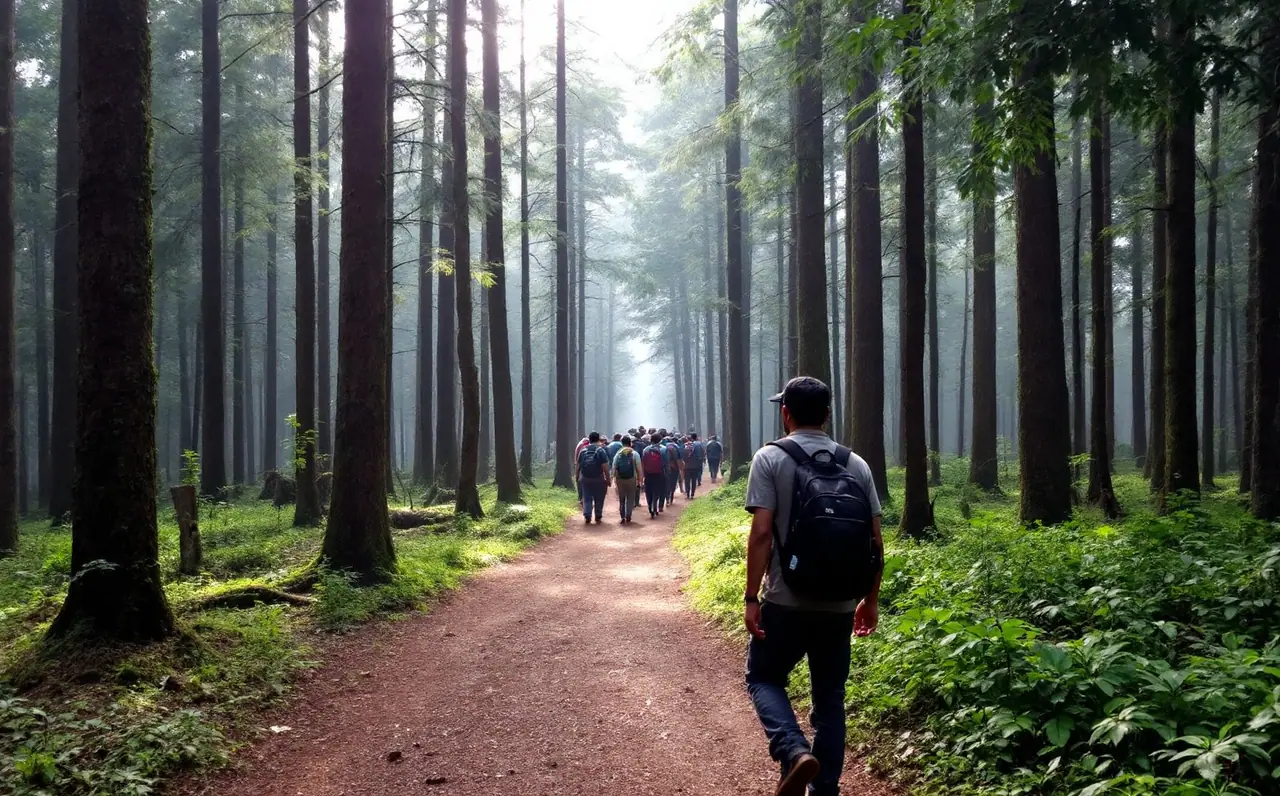
Ethical wildlife viewing in Indian forests
Plain rules of thumb for watching wildlife in Indian forests and reserves: distance, noise, food, night lights, bird calls, geotags and elephants on the road.

Tigers of Periyar and what the monitoring shows
How camera traps and India's four-yearly tiger estimate work, what they say about Periyar's tigers, and why most visitors never see one and still come home happy.
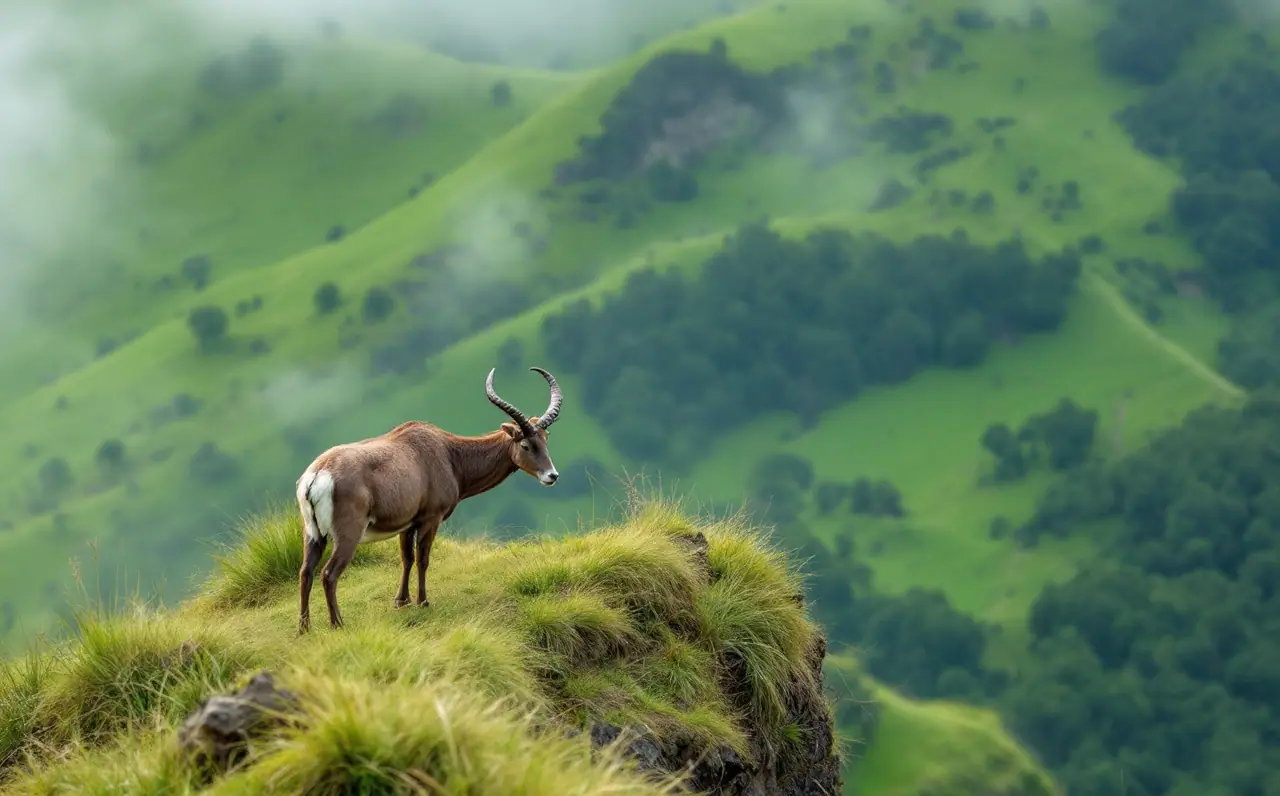
Nilgiri tahr and the shola grasslands of the high hills
The Nilgiri tahr lives only on the grassy cliffs of the southern Western Ghats. What research says about the animal, its shola-grassland home and how to watch it.