
Winter migrant birds in the Kerala hills
After the monsoon, pittas, wagtails, robins and leaf warblers reach the southern Western Ghats. Field marks, arrival months and where to look for each one.
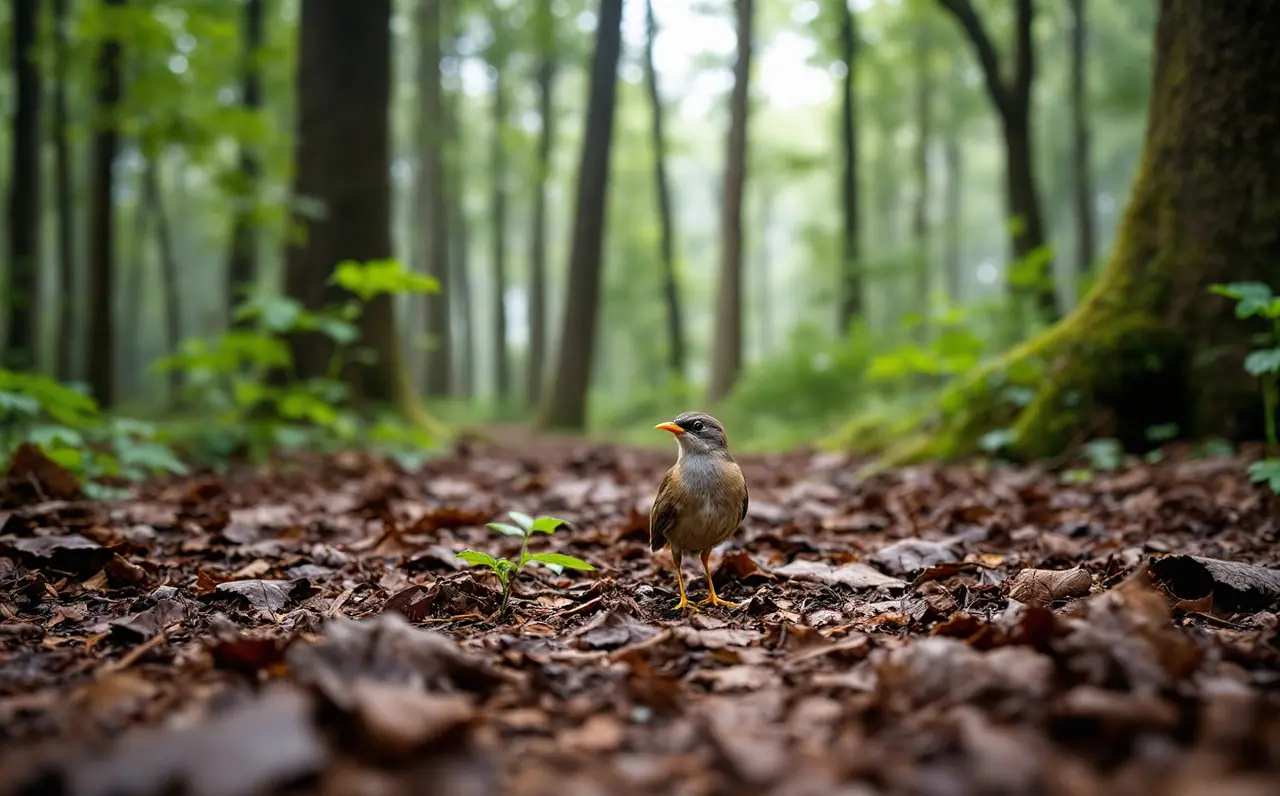
Every year, somewhere between the last heavy rains of the south-west monsoon and the first cool mornings of December, the forest around Thekkady changes its voice. A thin, sharp "tsit" comes from a stream that was silent all summer. A small brown bird sits on a wire where none sat in July. A bright green and red shape hops across a homestay lawn at dawn and vanishes into the coffee bushes. The resident birds are still there, but they have company. Birds that bred in the Himalaya, Siberia, northern China and Central Asia have flown south to spend the cold months in the warm, wet hills of southern India.
Migrants were the first birds that made me pay attention to the calendar. For years I treated a bird list as a list of places. Then I noticed that some names only appeared in my notebook between October and March, and the year started to have a shape. This piece is about those winter visitors in the southern Western Ghats: how and when they arrive, what to look for, and where around Thekkady and the hills you have a fair chance of finding them.
How migrants arrive after the monsoon
Most of the birds in this piece breed far to the north during the northern summer, when insects are plentiful and days are long. As autumn comes, they move south. Many small songbirds travel at night and rest and feed by day, which is why a garden can be empty one evening and hold a tired warbler the next morning.
The timing in Kerala depends on the species. Grey wagtails and brown shrikes are among the earliest, and some reach the south while the monsoon is still tailing off in August and September. Leaf warblers and flycatchers follow through October. Forest-floor birds such as the Indian pitta and the Indian blue robin are usually noticed from October onwards, often first as calls at dawn. By the end of November the cast is more or less complete, and it stays until March or April, when the birds feed up, moult into fresher plumage and leave again.
Two things make this a good season for a beginner. The rain eases, so you can walk further and the light under the trees improves. And because many migrants hold small winter territories and come back to the same spots, a bird you find on Monday is often in the same bush on Friday. Brown shrikes, for one, are known to return to the same wintering sites year after year.
If you are still choosing dates, Sneha's guide to the best time to visit Thekkady sets the migrant months against the rest of the year.
A rough calendar
This is a general pattern drawn from field guides and eBird records, not a timetable. Individual birds arrive early or late, and some species pass through rather than staying.
| Month | What tends to happen |
|---|---|
| August to September | First grey wagtails on streams and roadsides; brown shrikes appear on open perches |
| October | Leaf warblers in the canopy; Blyth's reed warblers in scrub; first pittas and blue robins calling at dawn |
| November to February | Full winter cast; forest wagtails on shaded paths; flycatchers settled in territories |
| March | Birds moult and feed heavily; some start to leave |
| April | Most have gone; a few late shrikes and warblers linger |
Species notes, with field marks
Indian pitta
The Indian pitta breeds in the Himalayan foothills, central India and the northern Western Ghats, then moves into peninsular India and Sri Lanka for the winter. In Kerala it is mostly a winter visitor. It is a plump, short-tailed bird on long legs, with a buff crown stripe, a thick black stripe through the eye, a white throat, green back, blue patches on the wing and a bright red vent under the tail. That description makes it sound easy. It is not, because it spends its time in leaf litter under dense cover.
Listen first. The call is a loud, clear two-note whistle, given mostly at dawn and dusk, with the head thrown back. Once you hear one, stand still and scan the ground under shrubs and plantation bushes nearby. Pittas also turn up in odd places on migration: exhausted birds sometimes land in gardens, verandas and even houses. If one does, leave it in a quiet, shaded spot and let it rest.
Indian blue robin
A small, ground-loving bird that breeds in Himalayan forest and winters in the Western Ghats and Sri Lanka. The male is deep blue above with rufous-orange underparts and a black mask with a white eyebrow. The female is olive-brown above and buff below and is easy to overlook. Both flick their tails and hop about in dark, damp undergrowth with plenty of leaf litter.
Look along shaded forest paths and the edges of streams, early, and be patient. The blue robin often shows for a second, disappears, and reappears a few metres along. It can be persuaded into view only by waiting, never by playing a recording.
Forest wagtail
Most wagtails bob their tails up and down. The forest wagtail swings its tail from side to side, and that one habit is the best field mark you will ever get for it. It breeds in eastern Asia and winters across tropical Asia, including the whole southern peninsula of India. Look for an olive-brown bird with black wings crossed by two bold yellowish wing bars, white underparts and a double black band across the breast, the upper one like a bib.
It prefers shade: forest paths, the edges of clearings, and the paths between rows of coffee and cardamom. Walk slowly along a shaded plantation track in the early morning and look at the ground ahead of you.
Grey wagtail
The grey wagtail is the commonest wagtail in the hills in winter and often the first migrant of the season. It is slim and long-tailed, grey above with a yellow vent and rump, and it pumps its tail constantly. It loves running water: rocky streams, the edges of the lake, wet roadsides and even drains. Its sharp, metallic "tzit" in flight is one of the sounds of a Kerala winter.
Brown shrike
A sturdy, brown bird with a black bandit mask, a white eyebrow, creamy underparts with warm flanks, and a hooked bill. It sits upright on an exposed perch (a wire, a fence post, the top of a bush) and drops to the ground for insects. Brown shrikes reach India from northern Asia around August and September and leave in April, and they are known for returning to the same wintering spots. If a homestay owner tells you "the shrike" is back on the gate post, they may well mean the same bird as before.
Greenish warbler and other leaf warblers
Leaf warblers are small, restless, greenish birds that pick insects from leaves high in the canopy. The greenish warbler is the one most beginners meet first in winter: grey-green above, off-white below, with a pale eyebrow and a thin, often faint, single wing bar. It gives a loud, slurred "chi-wee" call that is worth learning, because you will hear far more of them than you see.
Several other leaf warblers also winter in the Western Ghats, including the large-billed leaf warbler and the western crowned warbler. Telling them apart takes good views, careful attention to the bill, crown stripe and calls, and a fair amount of humility. It is perfectly honest to write "leaf warbler sp." in your notebook. These birds often travel with mixed flocks of resident species, so when a bird wave moves through, check every small green bird.
Blyth's reed warbler
A plain, olive-brown warbler with a short pale eyebrow and no streaks, found in scrub, garden hedges, overgrown plantation edges and thickets near water. It passes through and winters in southern India in good numbers. You will probably notice it as a hard, repeated "tchek" from inside a bush. It moves low and stays hidden, but it is common, and learning that call means you can count it without a view.
Asian brown flycatcher
A small, dull grey-brown flycatcher with a large head, a big eye with a pale eye ring and a pale base to the lower bill. It breeds in Japan, eastern Siberia and the Himalaya and winters in southern India and Sri Lanka. It sits upright on a bare twig at mid-height, sallies out after an insect and often returns to the same perch. Forest edges, plantation shade trees and big garden trees are all good places. It is not exciting to look at, which is exactly why it is worth learning: once you know its shape and habit, you will start picking out other flycatchers by contrast.
Two birds that are not migrants, but get mistaken for them
Tickell's blue flycatcher is a small blue flycatcher with an orange throat and breast and a white belly, and it is a resident breeder in India, not a winter visitor. It likes thick, shaded cover near wooded streams and also visits gardens. Beginners often log it as a migrant because they first notice it in winter when they are out more.
The blue-throated blue flycatcher, by contrast, is a true cold-season visitor to parts of the Western Ghats. In the southern hills it is scarce enough that I would check recent eBird records before expecting one.
Where to look around Thekkady
You do not need to go deep into the forest for most of these birds. A short list of habitats covers nearly all of them:
- Streams and the lake edge: grey wagtail, Indian blue robin along shaded banks.
- Shaded plantation paths: forest wagtail, Indian pitta, Indian blue robin, Asian brown flycatcher.
- Open perches near cultivation: brown shrike.
- Scrub, hedges and overgrown edges: Blyth's reed warbler.
- Canopy, with mixed flocks: greenish and other leaf warblers.
Plantations are private land, so walk only where you are welcome, and inside the reserve go only on the organised walks and follow the guide's instructions. Timings and rules for those are set by the reserve and change, so check the reserve's official website or the counter in Thekkady. For the wider picture of birds and other animals in the area, the Periyar wildlife guide is a good place to start.
How to learn migrants without getting overwhelmed
A few habits make winter birding manageable:
- Learn three calls before you travel: the pitta's two-note whistle, the grey wagtail's "tzit" and the greenish warbler's "chi-wee". They will tell you which migrants are around before you see a single feather.
- Go out in the first two hours after sunrise. Forest-floor birds are most active and most vocal then.
- Pick one shaded path or stream and walk it slowly every morning of your stay. Repeated visits to the same spot work better than covering ground, because wintering birds stay put.
- Check the eBird page for Idukki district for the month you are visiting, so your expectations match what other birders are reporting.
- Write down how you identified each bird. "Side-to-side tail, two yellow wing bars" is a better note than a name alone.
My beginner's guide to birding around Thekkady covers the resident birds that migrants mix with, and it is worth knowing those first. A winter visitor stands out only when you know what is normal.
The most useful thing you can do with migrants is notice when they leave. If you are in the hills in late March or April, write down the date you last see a grey wagtail or a brown shrike. Those last dates are harder to pin down than first arrivals, and a careful eBird checklist that includes them, or notes their absence, is a small but real addition to what is known about the season.

Arjun Pillai
Arjun grew up in Kottayam and has kept a bird list since a school trip to Thattekad. He writes the birding and butterfly pieces, mostly about learning to see the common species properly before chasing rare ones.
More from the same habitat
A starter list of butterflies in the southern Western Ghats
Ten butterflies to learn first in Kerala, from the southern birdwing to the rare Travancore evening brown, with families, puddling and gentle photography tips.
Birding around Thekkady for beginners
Where to look, when to go out and fifteen birds worth learning first around Thekkady and Kumily, from lake-edge darters to the Malabar trogon in the forest.