
What decades of research tell us about Periyar
A plain-language tour of published research on Periyar: its plants, fish, elephants and tigers, the people at the forest edge and the weeds creeping into its edges.

Periyar is one of the most studied forests in southern India. Botanists have walked its ridges with plant presses, fish biologists have netted its streams, elephant researchers have tried to make sense of herds with almost no adult males, and tiger surveys have covered its trails with cameras. Social scientists have studied the villages around it as closely as the forest itself.
Much of that work sits in journals and institute reports that few visitors will ever open. I read them for pleasure, and this piece is my attempt to sum up what they say, theme by theme, in plain language. I am not a scientist, so I have kept to what the authors themselves report, and named each study so you can find it.
Plants: a long list with a few local names
The foundation for most botanical work here is N. Sasidharan's Studies on the flora of Periyar Tiger Reserve, published as a Kerala Forest Research Institute research report in 1998. Surveys of that kind are slow, unglamorous work: collecting specimens across seasons and altitudes, pressing and identifying them, and checking them against herbarium records.
A companion paper in the Indian Forester in 1998, by J. Augustine, Sasidharan and co-authors, dealt with the grasses alone. It reported 163 grass species in 74 genera collected during the flora studies, including seven not previously recorded from Kerala. That figure is a useful reminder that Periyar is not only evergreen forest. Its grasslands, swampy clearings and lake edges hold a flora of their own.
The National Tiger Conservation Authority's note on the reserve gives a combined picture. It counts 1,985 species of flowering plants, of which 519 are endemic to the southern Western Ghats, and lists three plants known only from Periyar: Syzygium periyarensis, Habenaria periyarensis (an orchid) and Mucuna pruriens thekkadiensis. The names tell you where they were first described. The note puts tropical evergreen forest as the largest vegetation type, at about 38 percent of the area, with semi-evergreen forest and grassland each covering more than a quarter.
Mammals and birds
Mammal and bird surveys at Periyar have mostly been long-running lists built from many sources: forest department records, research projects, birdwatchers' counts and targeted surveys. The authority's note records 66 species of mammals, seven of them endemic to the Western Ghats, and more than 342 species of birds. Besides tigers and elephants, it names gaur, sambar, leopard, sloth bear, dhole, lion-tailed macaque, Nilgiri langur, barking deer and Nilgiri tahr among the notable mammals. BirdLife International lists Periyar as an Important Bird Area.
Species lists grow over time, and that is worth keeping in mind. A higher number in a newer report often means more people looked, in more places and seasons, rather than that new species arrived. For birds especially, checklists submitted by visiting birdwatchers now add to the record, and the same is true of butterflies and dragonflies.
Elephants: a herd shaped by poaching
The most striking research story from Periyar is about elephants. Only male Asian elephants carry tusks, so ivory poaching removes males and leaves females. At Periyar it went on long enough to distort the whole population.
Work by Raman Sukumar and colleagues at the Indian Institute of Science reported that by the 1990s the adult sex ratio at Periyar had fallen to around one adult male for every hundred adult females, an extreme figure by any standard. A 1998 paper by R. Sukumar, Uma Ramakrishnan and J. A. Santosh in Animal Conservation tried to reconstruct how this happened. Because real records of elephants killed and ivory taken were not available, the authors built a demographic model of the population with separate classes for females, tusked males and tuskless males, and tuned it to match the observed age and sex structure. Their conservative estimate was that 336 to 388 tuskers had been poached over 1974 to 1994, yielding a little over three tonnes of ivory, with most of it coming from young males aged 10 to 20.
Why does this matter beyond the numbers? With so few adult bulls, the authors discussed the risk of falling birth rates and other long-term effects on the population. It is also why the elephants you see at Periyar are mostly cows, calves and young animals, and why a big tusker on the lake shore still feels like an event.
A later survey, reported by P. S. Easa and Sabu Jahas in the Indian Forester in 2002, counted elephants in Periyar and adjacent areas in 1997 and also found a strongly female-biased population. Different studies give different ratios because some count all ages and others only adults, so always check which is meant.
Tigers and their prey
Tiger research at Periyar has moved, like elsewhere in India, from pugmark tracing to camera traps and statistical models. The authority's note says a 2010 assessment estimated 38 tigers in the Periyar region and that camera trapping identified 46 individuals in the reserve itself. It names gaur, sambar and wild boar as the main prey. National estimates every four years now set Periyar's numbers within the wider Western Ghats picture. I have written about how that counting works, and how to read the figures, in what monitoring shows about Periyar's tigers.
Fish of the lake and river
The lake that formed behind the Mullaperiyar dam, completed in 1895, flooded a forested valley and created a mix of still water and fast hill streams. That mix holds an unusual fish fauna.
A 2010 paper by K. V. Radhakrishnan and B. Madhusoodana Kurup in the Journal of Threatened Taxa, Ichthyodiversity of Periyar Tiger Reserve, recorded 54 fish species, 17 of them not on earlier lists for the reserve. The authors listed six species endemic to the reserve: the Periyar barb Hypselobarbus periyarensis, Lepidopygopsis typus (often called the Periyar trout), Crossocheilus periyarensis, Garra periyarensis, Nemacheilus periyarensis and Nemacheilus menoni. They classed 24 of the 54 species as threatened, with Lepidopygopsis typus Critically Endangered.
Two findings in that paper stand out. Several species reported in older surveys of the lake were not found, which the authors read as a sign of decline. And they recorded introduced fish, including common carp and Mozambique tilapia, alongside the natives. The Periyar barb itself, a large, slate-coloured fish, is listed as Endangered on the IUCN Red List.
People at the forest edge
Periyar's research record is unusual for how much of it is about people. Villages, estates and towns press close to the reserve, and the Sabarimala pilgrimage brings very large numbers of pilgrims through part of it each season.
From 1996 to 2004 Periyar was one of seven protected areas in the India Eco-development Project, supported by the World Bank and the Global Environment Facility. The idea was to reduce dependence on the forest by investing in the villages around it, through eco-development committees that planned local works, savings and alternative incomes. At Periyar this led to community-based tourism run by local groups, including former bark collectors and poachers who now walk with visitors and help patrol. The authority's note calls the change from poachers to protectors one of the reserve's best-known achievements, and the eco-development model has been studied and copied widely. The guide page on community eco-tourism looks at how these programmes appear from a visitor's side, and the history page covers the earlier story.
Researchers who study such projects tend to be cautious. Benefits are rarely spread evenly across households, and success depends on steady funding and trust that outlasts any single project. The research is worth reading for that balance.
Weeds, plantations and other newcomers
Invasive species are a quieter theme. The authority's note says weed invasion is a major challenge for the reserve. Research by the Kerala Forest Research Institute on four of the state's worst invasive plants, Lantana camara, Chromolaena odorata, Mikania micrantha and Mimosa diplotricha, found them densest along roads, power lines and plantations, the strips where forests have been opened up. The same pattern is easy to see from a jeep track at Periyar.
There are planted newcomers too. The note describes old eucalyptus plantations, left from a former grassland afforestation programme, still standing over about 30 square kilometres among grassland and natural forest. In the lake, the introduced fish noted above are a parallel case. On high grassland, planted trees are a loss rather than a gain: they shade out native grasses and the animals that graze them.
How to read a field study
- Check the date of the fieldwork, not just the publication. A paper from 2010 may describe surveys done years earlier.
- Look for the area covered. "Periyar" can mean the lake, the reserve, or the reserve with neighbouring forests.
- Find the method. A count, an estimate with a range, and a model are different things, and each has limits.
- Notice what the authors say they could not do. Good papers state their gaps plainly.
- Compare like with like. Sex ratios for all ages and for adults only, or species lists with different effort, cannot be set side by side.
- Read the abstract, then the methods, then the discussion. The results tables are where the numbers live.
A short reading list
| Theme | Study | What it found |
|---|---|---|
| Plants | Sasidharan, KFRI Research Report, 1998 | A systematic flora of the reserve |
| Grasses | Augustine, Sasidharan and others, Indian Forester, 1998 | 163 grass species, seven new for Kerala |
| Elephants | Sukumar, Ramakrishnan and Santosh, Animal Conservation, 1998 | Modelled ivory poaching and its effect on sex ratio |
| Elephants | Easa and Sabu Jahas, Indian Forester, 2002 | A demographic survey with a strong female bias |
| Fish | Radhakrishnan and Kurup, Journal of Threatened Taxa, 2010 | 54 species, six endemic to the reserve, exotics present |
If you only read one of these, make it the 2010 fish paper, which is free to read on the journal's website. Its species table, with threat status beside each name, gives a better sense of how special the lake and its streams are than any summary of mine.

Thara Joseph
Thara reads field studies for pleasure and turns them into plain explanations. She writes about wildlife, forests, rivers and what published research says about the southern Western Ghats.
More from the same habitat
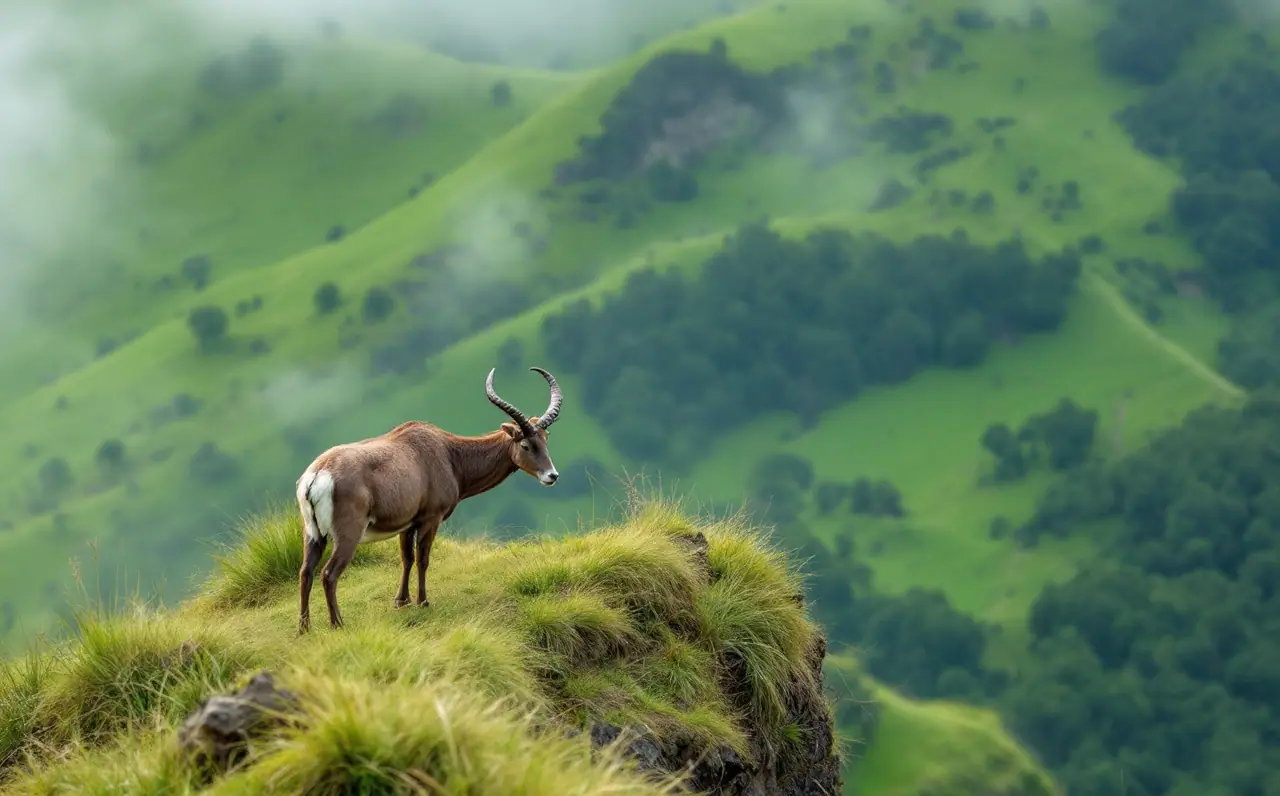
Nilgiri tahr and the shola grasslands of the high hills
The Nilgiri tahr lives only on the grassy cliffs of the southern Western Ghats. What research says about the animal, its shola-grassland home and how to watch it.
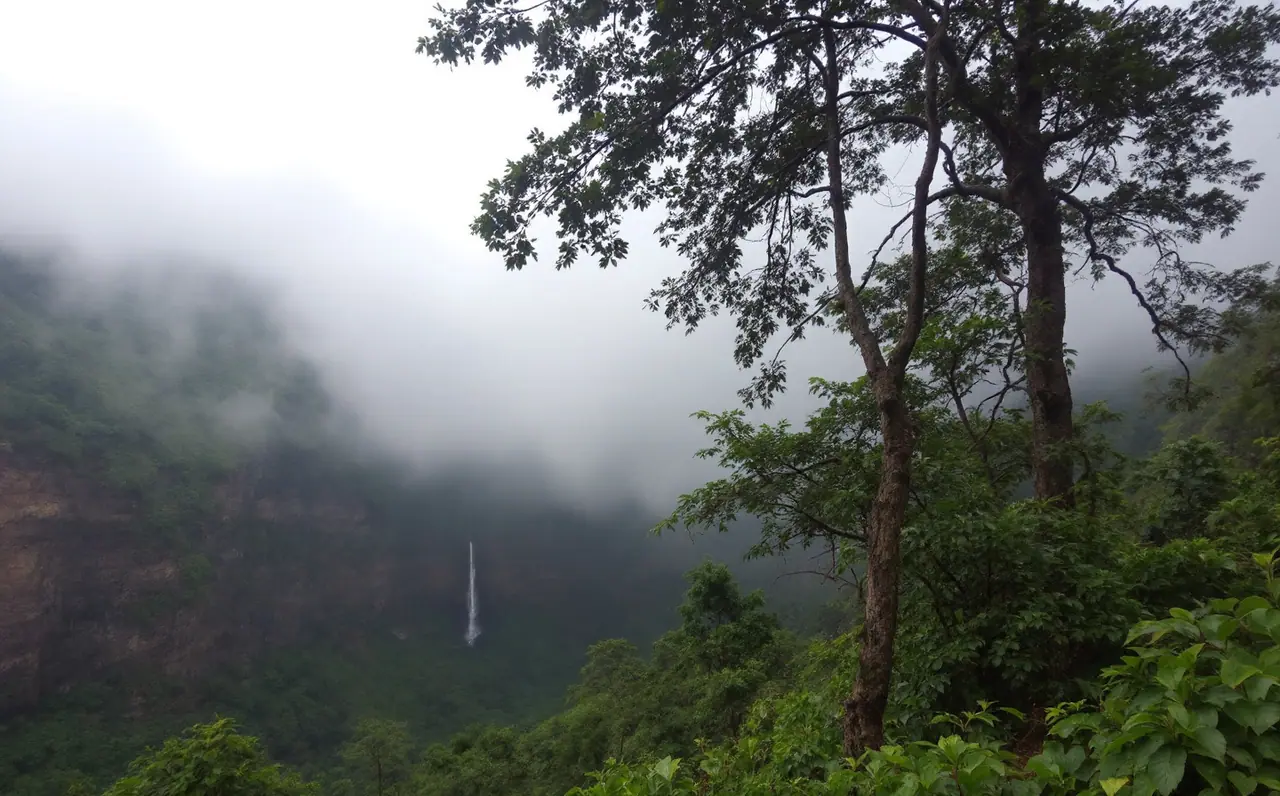
Travelling the Cardamom Hills in the south-west monsoon
Green ridges, full waterfalls and quiet towns, but also leeches, wet ghat roads and sudden closures. How to plan a monsoon trip around Thekkady that works.