
Tigers of Periyar and what the monitoring shows
How camera traps and India's four-yearly tiger estimate work, what they say about Periyar's tigers, and why most visitors never see one and still come home happy.
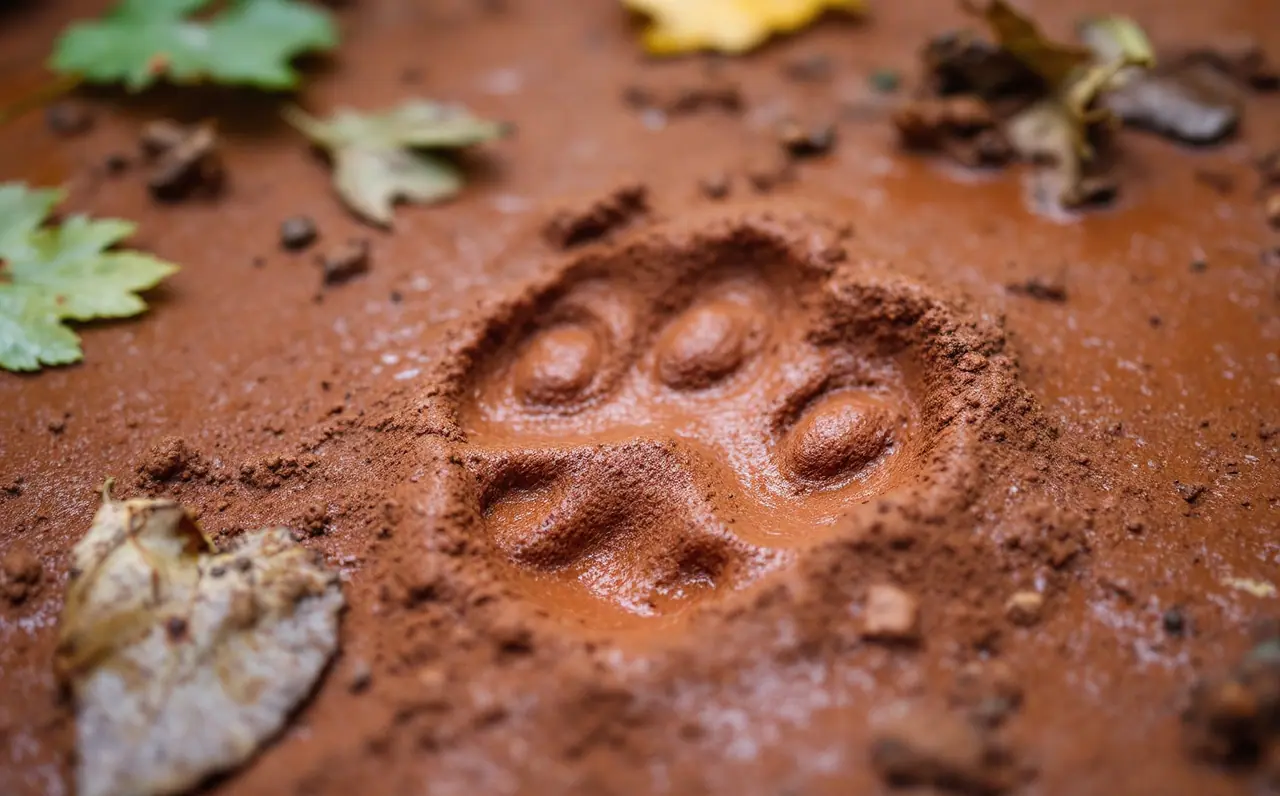
Periyar is a tiger reserve, and most people who visit it will never see a tiger. Both of those things are true at once, and they are not a contradiction. The forest here is tall, dense and evergreen, the animals are wary, and a tiger that is twenty metres from a path can stay entirely hidden. What we know about Periyar's tigers comes far less from sightings than from patient, methodical counting: camera traps on forest trails, dung samples, footprints and a national survey repeated every four years.
I am a reader of field studies, not a researcher, and this piece is my plain-language account of how that monitoring works and what it has said about tigers in Periyar and the forests around it. Where I give a figure, I name the report it comes from.
How Periyar became a tiger reserve
The protected forest around the lake has a long history. Parts of it were set aside as a game sanctuary in the 1930s under the Travancore state, and the area was consolidated as a wildlife sanctuary in 1950. In 1978 it was declared a tiger reserve under Project Tiger, the national programme India launched in 1973 to protect tigers and their habitat. A core area was later notified as a national park.
According to the National Tiger Conservation Authority's note on the reserve, Periyar Tiger Reserve covers about 925 square kilometres, of which 881 square kilometres is core or critical tiger habitat and a small 44 square kilometre strip is buffer. The same note describes Periyar and its neighbouring protected areas as the largest tiger conservation block in the southernmost Western Ghats, extending over roughly 4,078 square kilometres across Kerala and Tamil Nadu. It also stresses forest links southward through Ranni, Konni, Achencovil and nearby divisions towards Kalakkad-Mundanthurai Tiger Reserve in the Agasthyamalai hills. For a large predator that needs room, those links matter as much as the reserve itself.
Stripes as fingerprints
The modern way of counting tigers rests on a simple fact: no two tigers have the same stripes. The pattern on each flank is unique to the animal and stays the same through its life, a bit like a fingerprint. The left and right sides differ, so researchers try to photograph both.
Camera traps make use of this. A pair of cameras is fixed to trees or posts on either side of a trail, a stream crossing or a ridge path that tigers are likely to use. When an animal walks past, a sensor fires both cameras and catches each flank. Over weeks, a grid of these stations builds up a library of photographs.
The next step is where the statistics come in. Analysts identify each tiger by its stripes and note which station photographed it and when. Some tigers turn up again and again, others once. This is the logic of capture-recapture: if most animals you "catch" on camera are ones you have already seen, you have probably found most of the population; if new faces keep appearing, there are more out there. K. Ullas Karanth's work in Nagarhole in the 1990s, published in Biological Conservation in 1995 and with James Nichols in Ecology in 1998, showed how this could produce sound estimates of tiger numbers and density in Indian forests.
Later methods, called spatially explicit capture-recapture, also use where each tiger was photographed. An animal caught at several stations far apart clearly ranges widely; one caught at a single spot may live at the edge of the grid. Taking location into account gives better estimates of density, the number of tigers per hundred square kilometres, which is a more honest measure than a single headcount.
Why pugmarks fell out of favour
For decades, India counted tigers mainly by tracing pugmarks and assuming each track shape belonged to a different animal. Researchers criticised this method sharply. A 2003 paper in Animal Conservation by Karanth and colleagues argued that pugmark counts could not reliably tell individuals apart and had no way of measuring their own error. Pugmarks are still useful for knowing that a tiger used a trail, but not for counting them.
The All India Tiger Estimation
Every four years the National Tiger Conservation Authority and the Wildlife Institute of India, working with state forest departments, run a nationwide survey usually called the All India Tiger Estimation. Cycles have been completed for 2006, 2010, 2014, 2018 and 2022.
Each cycle has several layers. Forest staff walk survey routes and record tiger signs, prey sightings, dung counts and human disturbance. Satellite data describe habitat and roads. Camera traps are set in a large sample of forests, and where cameras are hard to use, DNA from scats can help identify individuals. Tiger reserves also carry out their own continuous monitoring between national cycles.
The 2022 report, Status of Tigers, Co-predators and Prey in India, estimated India's wild tiger population at 3,682, within a range of 3,167 to 3,925. The state-wise figures from the same series, as tabled in Parliament, put Kerala at 213 tigers in 2022, up from 190 in the 2018 estimate and 46 in the first cycle in 2006. The early numbers are not strictly comparable with later ones, because methods and coverage improved between cycles, but the direction has been steadily upward.
What it says about Periyar
The National Tiger Conservation Authority's note on Periyar calls it one of the best-protected tiger habitats in the country and a source population for the wider forest block. It records that a 2010 assessment estimated 38 tigers in the Periyar region, and that camera trapping identified 46 individual tigers in the reserve itself. The note also mentions that the reserve has developed its own camera-trap monitoring and that field staff are trained to run it.
Reported numbers for one reserve can move around between surveys. Tigers cross boundaries, young animals disperse, and survey effort changes. A figure for "Periyar" may mean the reserve alone or the reserve with neighbouring forests. When you read a number in a newspaper, check which area and which year it refers to before comparing it with another. You can find the national reports on the National Tiger Conservation Authority website.
What tigers eat here
A tiger population is only as healthy as its prey. The authority's note names gaur, sambar and wild boar as the main prey species at Periyar. These are big animals: a sambar stag or a young gaur is a substantial meal, and a tiger may feed on one kill over several days. Smaller animals such as barking deer, mouse deer and monkeys are taken too.
This is why tiger surveys now count prey as carefully as predators. Sign surveys record dung of deer and gaur along transects, and camera traps catch prey as well as tigers. A forest with plenty of sambar and gaur, and enough cover and water, can support more tigers than one where hunting has thinned the herbivores.
If you want to understand the animals tigers live alongside, the piece on watching elephants at Periyar covers the lake shore, where gaur and sambar often come out to graze as well.
Signs you might see
You are far more likely to meet the traces of a tiger than the animal. Learning them makes a walk in the forest more interesting. Follow your guide's lead and the reserve's rules at all times, and never leave the path to investigate.
| Sign | What it looks like | Notes |
|---|---|---|
| Pugmark | Four toe pads and a broad main pad with a three-lobed rear edge; no claw marks | Leopard tracks are smaller and neater; dog tracks show claws |
| Scrape | A patch of ground raked by the hind feet, sometimes with dung or urine | Often on trails and ridges, used as a scent signal |
| Scat | Large, segmented, full of hair and bone fragments | Fresh scat is dark; old scat turns white and chalky |
| Tree marks | Claw scratches high on a trunk | Hard to tell from leopard or bear marks without other clues |
| Strong smell | A sharp, musky odour near bushes or trees | Urine sprayed as a territorial mark |
Listen to the forest
The best tiger detectors in Periyar are the animals it hunts. A sambar that spots a predator gives a loud, explosive honk, often repeated, and may stamp a forefoot. Barking deer let out a sharp, dog-like bark that carries a long way. Nilgiri langurs high in the canopy give harsh alarm calls and stare fixedly in one direction. When several of these start up together and keep going, something is moving through the forest, and it may be a tiger, a leopard or a pack of wild dogs. Guides read these calls well. Stand still, stay quiet and let them decide what happens next.
Why not seeing a tiger is fine
People sometimes leave Periyar disappointed because they did not see a tiger. I understand the feeling, but the forest gives a great deal to anyone who looks closely: elephants on the shore, gaur at the edge of a clearing, otters in the lake, hornbills overhead and the sound of a sambar's alarm rolling down a valley.
There is a better reason to be content. A reserve where tigers are hard to see is often a reserve where they are left in peace. Tigers here have dense cover, plenty of prey and large areas without roads. Chasing sightings, crowding vehicles round an animal, or pressing guides to find one does real harm, and it is not how Periyar's activities are designed. Boat trips, guided walks and other activities run under the reserve's own rules, which change from time to time, so check the reserve's official website or the counter in Thekkady for current timings and fees.
A good way to spend a morning is to treat tiger signs as the reward. Look for fresh pugmarks on a muddy track after rain, note a scrape, listen for alarm calls, and think about the camera trap that may be quietly recording the same trail. Good walking shoes, a water bottle and leech socks for the wet months make that kind of slow morning far more comfortable; the what to pack for the Western Ghats list covers the rest.
The next time a national estimate comes out, read the Kerala and Western Ghats sections rather than just the national headline. The local detail, which area was surveyed and how many individuals were photographed there, tells you far more about Periyar than any single total.

Thara Joseph
Thara reads field studies for pleasure and turns them into plain explanations. She writes about wildlife, forests, rivers and what published research says about the southern Western Ghats.
More from the same habitat
Ethical wildlife viewing in Indian forests
Plain rules of thumb for watching wildlife in Indian forests and reserves: distance, noise, food, night lights, bird calls, geotags and elephants on the road.
Nilgiri tahr and the shola grasslands of the high hills
The Nilgiri tahr lives only on the grassy cliffs of the southern Western Ghats. What research says about the animal, its shola-grassland home and how to watch it.
Watching elephants at Periyar, from the lake shore to the forest edge
Why the Periyar lake shore is such a good place to see Asian elephants, how to read a herd's body language, and how people at the forest edge live beside them.