
Ethical wildlife viewing in Indian forests
Plain rules of thumb for watching wildlife in Indian forests and reserves: distance, noise, food, night lights, bird calls, geotags and elephants on the road.
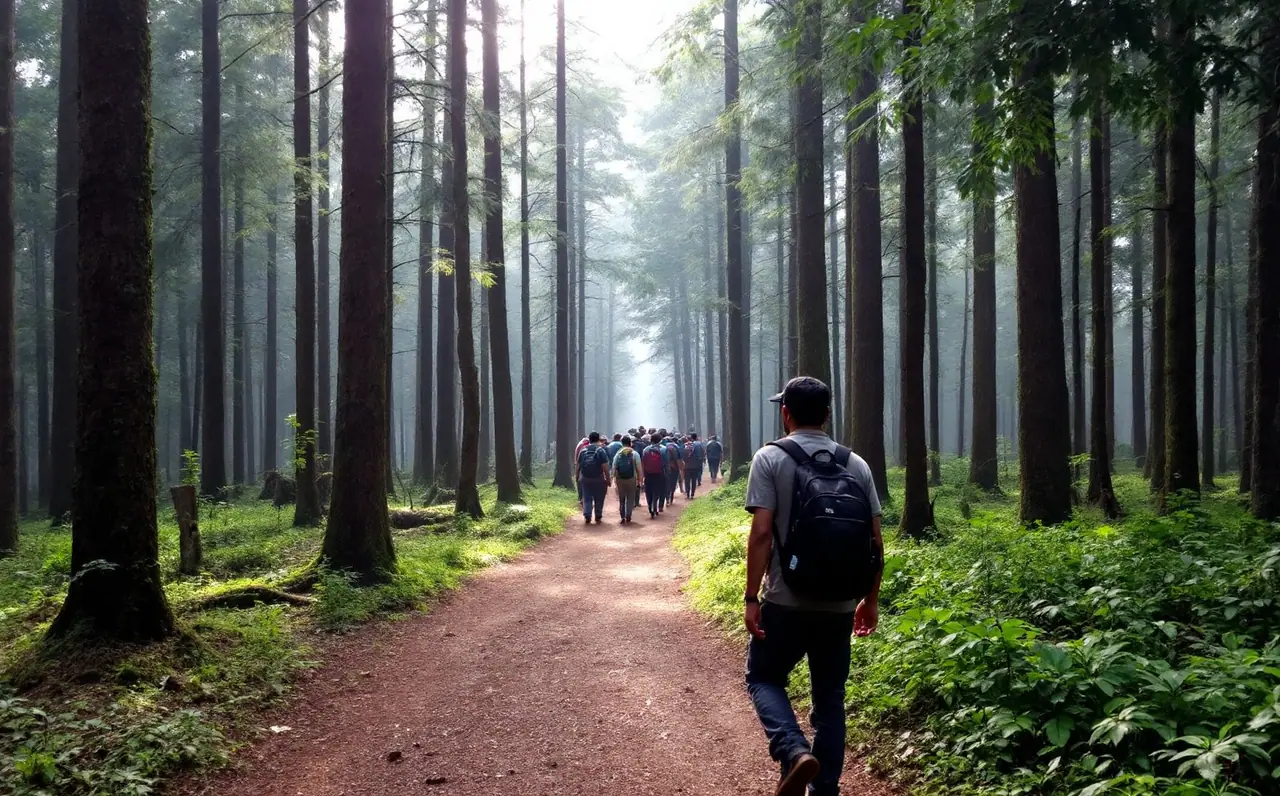
Most of the harm visitors do to wildlife in Indian forests is not deliberate. It is a car stopped too close, a biscuit tossed to a monkey, a phone torch pointed into a tree at night, a photo posted with the exact spot attached. Each one feels small. Multiply it by the number of people who visit a reserve like Periyar in a busy season, and it changes how animals behave.
I am not a forest officer or a guide. I am a hobby photographer who has spent a lot of time in forests watching other people watch animals, and occasionally getting it wrong myself. What follows is a set of rules of thumb that apply in Periyar and in most Indian reserves. They are not a replacement for the rules of the reserve you are visiting, which come first and change from time to time. Check the reserve's official website or the counter in Thekkady for current rules, timings and fees.
The reserve's rules and the guide come first
Every protected area in India has its own rules for visitors, set by the forest department that manages it. They cover where you can go, when, with whom, and what you can carry. They are written with local knowledge you do not have: which trail a herd has been using, where a tigress has cubs, which stretch of road floods.
Inside the forest, the guide or naturalist with your group has the final word. If they say stop, stop. If they say turn back, turn back without bargaining for five more minutes. They are reading alarm calls, fresh dung and wind direction while you are looking through a viewfinder.
India's Wild Life (Protection) Act, 1972 sits behind all of this. In general terms, it makes hunting, capturing or harming wild animals an offence, protects the nests and eggs of wild birds and reptiles, and restricts what people may do inside sanctuaries, national parks and tiger reserves. Individual reserves add their own rules on top. You do not need to know the legal detail to behave well, but it helps to know that "just this once" is not a defence.
Distance and noise
The simplest test: if an animal changes what it is doing because of you, you are too close. A deer that lifts its head and stares, a bird that stops feeding and flies to a higher branch, an elephant that turns to face you and spreads its ears. Each is telling you something. Back off quietly before it has to tell you more firmly.
Noise carries further in a forest than people expect. Keep voices low, switch phones to silent, and leave speakers at home. Bright clothing in red, white or neon colours stands out in green shade, so muted greens, browns and greys are kinder to the animals and to everyone else in the group.
Stay on the path or in the vehicle. Paths exist so that people are predictable, and predictable people disturb animals less. Walking off a trail to get closer to a bird tramples ground plants, can put you between a mother and her young, and in Periyar's forests can bring you face to face with an elephant you had not seen. In a vehicle, stay seated with arms inside. Getting out to take a photograph is one of the most common ways visitors get hurt in Indian reserves.
Why you should not ask a driver or boatman to get closer
This one deserves its own section because it is so common. A visitor pays for a jeep drive or a boat trip, sees an animal at a distance and asks the driver to move closer. The driver, who depends on tips and good reviews, often feels pressure to say yes.
Do not ask. When a vehicle or boat pushes towards an animal, the animal has two choices: leave, or defend itself. Leaving means it abandons a feeding spot, a drinking place or a resting calf. Defending itself, in the case of an elephant, can put everyone on board in danger. Drivers and boat crews who keep their distance are not being lazy. They are doing their job properly, and they will be working in that forest long after you have gone home.
A long lens or a pair of binoculars is the answer to "too far". The piece on watching elephants at Periyar explains how to read a herd's body language from the shore or the water, so you can tell when a group is relaxed and when it is losing patience.
No feeding, of any animal
Macaques at car parks and jetties, langurs near viewpoints, mynas and bulbuls on lodge verandas: all of them learn fast that people mean food. That lesson does them harm. Animals that are fed lose their caution around people and roads, get hit by vehicles, eat things that make them ill, and become aggressive when food does not come. Bonnet macaques that have learnt to snatch bags are a nuisance to visitors and, in the end, a problem that the forest department has to manage.
Keep food in closed bags, eat inside a vehicle or a building rather than at a forest viewpoint, and never leave scraps behind. If a monkey approaches, do not stare at it or show your teeth in a smile, which it may read as a threat. Hold your bag close, turn slightly away and walk on calmly.
Lodges sometimes put out fruit or bird feeders to bring animals close for guests. It makes for easy photographs, but it changes local behaviour. I would rather see fewer birds than see birds that have learnt to wait for a tray.
No plastic, and leave nothing behind
Plastic in a forest gets eaten. Elephants, deer and monkeys all investigate wrappers that smell of food, and plastic does not pass through them cleanly. Many Indian reserves restrict plastic inside their boundaries. Carry a refillable water bottle, keep snacks in a reusable box, and bring a small bag for your own rubbish, plus any you find on the trail if you are happy to pick it up.
Night lights and flash
Many forest animals are active at night, and their eyes are built for darkness. A torch beam held on an animal can dazzle it and leave it vulnerable. Flash does the same in a fraction of a second.
If you join a guided night walk, let the guide control the light. Point your own torch at the ground in front of your feet, use a red filter if you have one, and do not hold any beam on an animal's eyes. Do not use flash on nocturnal animals, and avoid it on any wildlife. More on this, and on photographing without disturbing, is in photographing wildlife in rainforest light.
Call playback for birds
Playing a recorded bird call from a phone is the fastest way to bring a hidden bird into view. It works because the bird thinks a rival has moved into its territory. It then spends energy and time it needs for feeding and nesting chasing a speaker, and in the breeding season it may leave its nest exposed. Repeated playback at the same spot, by many visitors, adds up.
Many protected areas discourage or ban it. Learn calls by listening, not by broadcasting. A field guide, a sound app used with headphones, and patience will show you more birds in the end, and they will be behaving naturally when you see them.
Sharing locations online
A photograph of a nesting hornbill, an owl roost or a rare orchid with a precise location attached can bring a crowd within days, and occasionally people with worse intentions than a crowd. Phones and many cameras embed GPS coordinates in every image.
Before posting pictures of sensitive species, turn off location tagging or strip it from the file, and describe the place in general terms: "the Western Ghats" or "a forest in Kerala" is enough. Do not name exact trees, trails or nest sites in captions or comments. If someone asks privately, think about whether they need to know.
Choosing operators who employ local people
How you spend your money in a forest town matters too. Guides, naturalists and boat crews from nearby villages know the forest, and when local families earn from visitors, wildlife becomes worth more to them alive. Look for operators and homestays that employ people from the area, and walks run with local communities where they exist. The guide page on community eco-tourism explains how programmes of this kind are generally set up around reserves and what to look for, from a visitor's side.
Elephants and gaur on the road
Roads around reserves pass through animal country, and meeting an elephant or a herd of gaur on one is not rare around Thekkady and in many other Indian forests. Practical habits help, though nothing makes it risk free.
- Stop well back, far more than feels necessary, and give the animal the road.
- Stay in the vehicle. Do not get out to photograph, and do not use flash.
- Do not honk, rev the engine or flash headlights to hurry it along.
- Keep the engine running and leave yourself a clear way to reverse.
- Do not try to squeeze past, even if the animal seems calm.
- If it moves towards you, reverse slowly and steadily.
- Follow instructions from forest staff, local drivers and residents, who know how animals on that stretch behave.
Gaur look placid but are very large and can charge if crowded. Elephants with calves are the least tolerant of all. Patience is usually all it takes: most animals cross and move off within minutes. If you are driving the hill roads at dusk or after dark, slow down and expect animals around every bend.
Do and don't at a glance
| Do | Don't |
|---|---|
| Follow the reserve's rules and the guide's instructions | Argue for more time or a different route |
| Keep voices low and phones silent | Play music or call loudly to an animal |
| Watch from a distance with binoculars or a long lens | Ask a driver or boatman to move closer |
| Keep food in closed bags | Feed monkeys, birds or any other animal |
| Carry rubbish out, including small wrappers | Leave plastic on trails or in the water |
| Stay on paths and inside vehicles | Step off trails or out of vehicles for photographs |
| Point torches at the ground at night | Shine lights or flash on nocturnal animals |
| Learn bird calls by listening | Use call playback to draw birds out |
| Strip location data from sensitive photos | Post exact locations of nests and roosts |
| Wait patiently for an elephant or gaur to clear the road | Honk, flash lights or try to pass |
Questions travellers ask
Is it rude to refuse a guide who offers to take us closer?
No. A polite "this is close enough for us" is fine, and most good guides will appreciate it. If someone repeatedly pushes towards animals, mention it to the people who run the activity.
Can I use a drone for wildlife pictures?
Treat drones as off limits in and around protected areas unless you have clear written permission from the authorities. They disturb animals and are restricted in many places in India.
What if I see someone else harassing an animal?
Do not confront them in a way that adds to the disturbance. Move away from the animal, and tell the guide, the boat crew or forest staff, who have the authority to deal with it.
The one habit that covers almost everything else is patience. Let the animal decide how close the encounter gets, and leave it doing what it was doing before you arrived.

Rohan Varghese
Rohan photographs forests and the animals in them as a long-running hobby. He writes about cameras in humid weather, packing, ethical viewing and keeping notes in the field.
More from the same habitat

Choosing a homestay in spice country, from Kumily to the estates
Town, estate or forest edge: how to pick a homestay around Thekkady, Kumily and Vandanmedu, what to ask before you pay, and how to be a good guest.
Munnar or Vagamon: choosing a hill-town side trip from Thekkady
Tea slopes and Nilgiri tahr in busy Munnar, or pine woods and open meadows in quieter Vagamon. How to choose, with two-day plans and a side-by-side table.
Tigers of Periyar and what the monitoring shows
How camera traps and India's four-yearly tiger estimate work, what they say about Periyar's tigers, and why most visitors never see one and still come home happy.