
Spice & Tea CountryVisiting Responsibly
Choosing a homestay in spice country, from Kumily to the estates
Town, estate or forest edge: how to pick a homestay around Thekkady, Kumily and Vandanmedu, what to ask before you pay, and how to be a good guest.
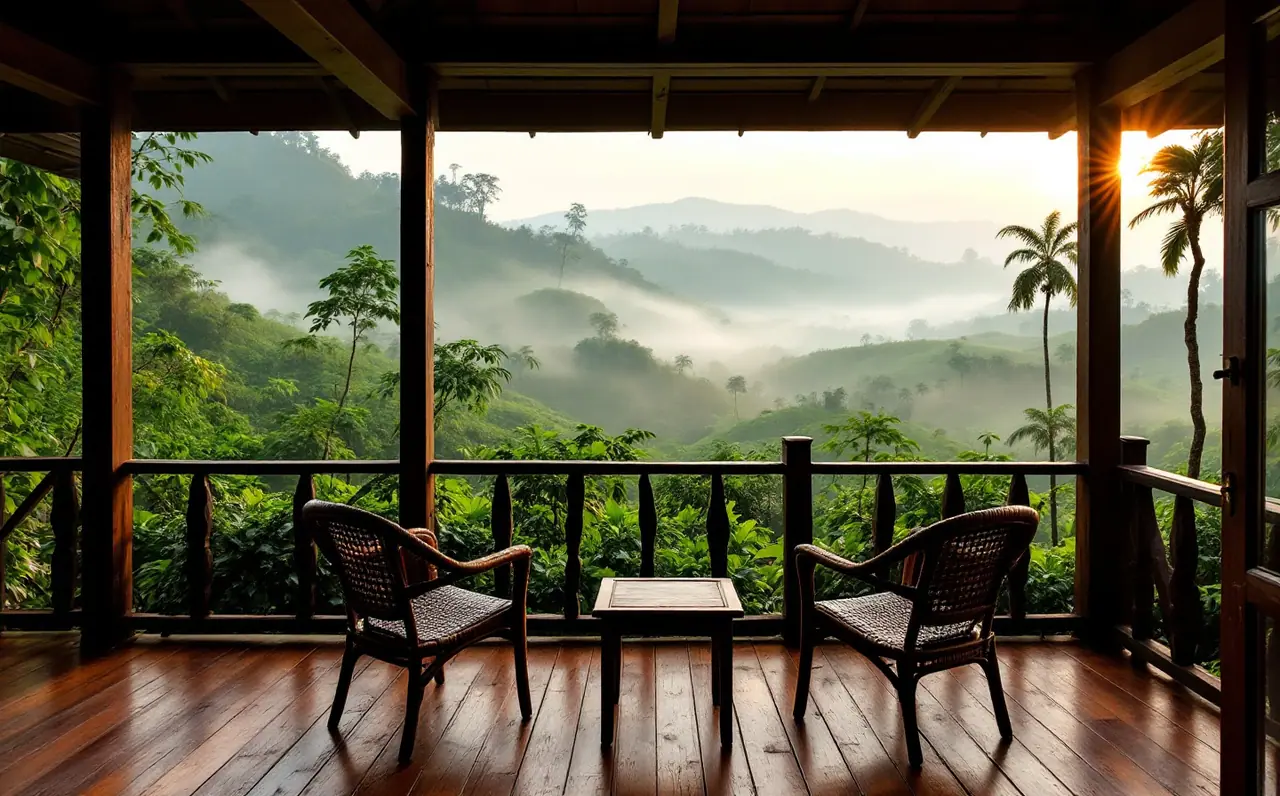
Around Kumily almost every second house seems to have a spare room and a hand-painted board by the gate. Some of these homestays are wonderful: a family that cooks the way my aunts did, a veranda over a cardamom slope, a host who knows which bend in the road the hornbills cross in the morning. Others are small hotels calling themselves homestays, or rooms rented by someone who lives in another town. Both kinds can be fine. The trick is knowing which one you want and asking the right questions before you send money.
I grew up between Kumily and the estates further up the ridge, and I still have relatives who host guests, so a lot of what follows comes from listening to both sides of the arrangement. Here is how I would choose.
First decide where you want to wake up
The biggest decision is not the room. It is the location, because in hill country a few kilometres can mean a very different trip.
In or near Kumily town
Kumily is the small town just outside the main entrance to Periyar Tiger Reserve at Thekkady. Staying here means you can walk to shops, restaurants, the bus stand and the spice shops, and reach the reserve entrance quickly in the morning. The trade-off is noise: traffic on the main road, temple and church loudspeakers on festival days, dogs at night, and buildings close together. For a first visit with a lot of reserve activities planned, or for travellers without a car, town is often the sensible choice.
On a plantation or estate
Further out, towards Chellarkovil, Vandanmedu, Anakkara or the smaller roads off the Kumily to Kottayam highway, you find homestays on working cardamom, pepper and coffee farms. Mornings are quiet apart from birds and the sound of pickers. You may be able to walk the estate, see drying sheds in season and eat vegetables from the garden. The catch is distance and dependence on transport. Estate roads can be narrow, steep and broken, and after dark you are unlikely to want to drive them. If you want to understand the crops you are sleeping among, our piece on cardamom, pepper and tea around Kumily makes a good companion.
At the forest edge
A few homestays sit right against the forest boundary, sometimes next to an elephant trench or a fence. They can be magical for birds and night sounds, and for the feeling of the forest being right there. They also come with rules you should take seriously: no wandering after dusk, no walking into the forest, and a real chance of animals near the house. Ask the host how they manage it and listen to the answer.
Homestay types compared
| Type | Best for | Watch out for | Good question to ask |
|---|---|---|---|
| Town homestay, Kumily | First visits, no car, early starts at the reserve | Road noise, festival loudspeakers, small rooms | "Which side of the house faces the main road?" |
| Family home on an estate | Slow stays, food lovers, plantation walks | Steep or broken access roads, fewer shops nearby | "Can a normal car reach the gate in heavy rain?" |
| Forest-edge homestay | Birders, night sounds, quiet | Wildlife near the house, strict after-dark habits | "Do elephants come close, and what do you ask guests to do?" |
| Hill-view stay higher up (Vandanmedu side, towards Munnar or Vagamon) | Cool nights, views, misty mornings | Long drives to the reserve, fog on the roads | "How long does the drive to Thekkady really take in the morning?" |
| Larger guesthouse calling itself a homestay | Groups, more rooms, more privacy | Less of a family feel, hosts may not live on site | "Does the family live here, and who will we actually meet?" |
If you are combining Thekkady with another hill town, the trade-offs between those two bases are laid out in Munnar or Vagamon from Thekkady.
Questions to ask before you pay
A short message before you commit saves a lot of disappointment. Hosts around here are used to questions and the good ones answer them happily. These are the ones I would send.
- Hot water. Is it solar, an electric geyser or both? Solar water can be lukewarm after a few cloudy monsoon days, and hill mornings are cold.
- Power backup. Cuts happen in heavy rain and storms. Is there an inverter or generator, and does it run the lights and fans or just a bulb or two?
- Food. Are breakfast and dinner cooked at home? Can they manage vegetarian, vegan, no-chilli or allergy needs? Is there anywhere to eat nearby if you skip a meal?
- Distance by road. How long does it take to drive to the reserve entrance at Thekkady, not just how many kilometres? In the hills the minutes matter more than the distance.
- Parking and access. Is there parking inside the gate? Can an ordinary car get up the drive, or do you need to leave it on the road?
- Monsoon access. Does the road flood or slip in heavy rain? Has the house been cut off before? This matters a great deal from June to September; the monsoon is when hill roads are at their worst.
- Noise. Is there a temple, church, mosque, school or main road close by? Are there festivals coming up?
- Mobile signal and internet. Which network works at the house? Estates often have one bar or none.
- Rooms and bathrooms. Attached or shared bathroom? Mosquito nets or screens on the windows? A fan, and is it needed?
- Payment and cancellation. How much advance do they want, how do they want it, and what happens if a landslide closes the road?
Do not be shy about the last two. Clear answers about money and cancellations are a sign of a well-run place.
Reading reviews well
Online reviews are useful, but they need careful reading.
- Read the middle ratings first. A three-star review often says more about a place than ten five-star ones.
- Look for specifics. "Lovely family, great food" tells you little. "Dinner at eight, appam and stew, the steep drive was fine in a hatchback" tells you a lot.
- Check the dates of the reviews against the season you plan to visit. A house that is delightful in January can be damp and cut off in July.
- Watch how the host replies to complaints. A calm, specific reply is a good sign. An angry one tells you what will happen if something goes wrong while you are there.
- Be cautious if every review sounds the same, arrives in a burst, or mentions only the view.
- Photographs taken by guests are more honest than the host's wide-angle shots of a freshly made bed.
The official classification, briefly
Kerala Tourism runs a voluntary classification scheme for homestays with three grades, Diamond, Gold and Silver, based on the facilities and the quality of accommodation. A committee set up by the government inspects the house and recommends a grade, and the Department of Tourism issues the order, which is valid for three years before reclassification. The Kerala Tourism classification page sets out the process.
A grade tells you that a place has been inspected and meets a checklist. It does not tell you whether you will like the family, the food or the road. Many good homestays are unclassified, and a classified one can still be the wrong fit for you. Use it as one signal among several, not a guarantee.
Being a good guest
A homestay is somebody's home, and the best stays happen when guests remember that.
- Meal times. Tell your host in the morning whether you will be in for dinner, and roughly when. Many families cook fresh for each meal and plan around you.
- Water. Hill water often comes from a well, a spring or a tank filled by rain. Take short showers, turn off taps, and ask before using a lot of water for laundry, especially in the dry months from February to May.
- Waste. Rural Kerala has limited rubbish collection. Carry a cloth bag, refuse plastic where you can, and ask how the household separates waste rather than leaving a bin full of bottles.
- Electricity. Switch off fans, lights and heaters when you go out. Power can be precious in places on a long rural line.
- Noise. Families wake early and sleep early. Keep music and calls quiet after dinner.
- Dress and behaviour. Kerala homes are informal but modest. Ask before photographing family members, and ask before wandering into the kitchen or the drying shed.
- Feedback. If something is wrong, tell the host directly and politely first. Most will fix it immediately.
If you want to see how local families take part in tourism beyond homestays, the guide to community eco-tourism has more, and the packing list covers what the house will not have for you: a torch, a rain layer, a quick-dry towel and something warm for the evening.
Safety basics
Hill homestays are generally relaxed and friendly places, but common sense still applies, and nothing here is a guarantee.
- Share your stay details and rough plans with someone at home.
- Check that your room locks from the inside and that you can lock away a passport and spare cash.
- Ask where the nearest hospital or clinic is, and how long it takes to reach at night. Carry any regular medicines with you.
- Do not walk unlit roads after dark near the forest edge. Elephants, gaur and wild boar use the same roads, and so do fast vehicles.
- In heavy rain, ask the host whether it is safe to drive. Landslips and fallen trees close hill roads quickly, and they know which stretches to avoid.
- Follow the instructions of the reserve's staff and guides for anything you do inside the reserve, and check the reserve's official website or the counter in Thekkady for current activities, timings and fees.
Solo travellers and families
Solo travellers, including women travelling alone, often find homestays more comfortable than small hotels, because you are staying with a family rather than in a corridor of rooms. Look for places where the hosts actually live on site, and where reviews from other solo guests mention feeling at ease. A room in or near Kumily town keeps you close to transport and shops if you do not drive.
Families with children usually do best on estates with a flat garden, a gate and a host who is happy to show children around the farm. Ask about steps, railings on verandas, the depth of any pond or well nearby, and whether the kitchen can make simple, mild food. Check the bed arrangements, since many homestays have doubles only and add mattresses on request.
The single best habit when choosing a homestay in spice country is to ask the host how long the drive to Thekkady really takes at seven in the morning. Their answer, and how honestly they give it, will tell you most of what you need to know.

Biju Abraham
Biju spent his childhood between Kumily and the cardamom estates further up the ridge. He writes about spice and tea country, hill towns, food and the people who live at the forest edge.
More from the same habitat
Ethical wildlife viewing in Indian forests
Plain rules of thumb for watching wildlife in Indian forests and reserves: distance, noise, food, night lights, bird calls, geotags and elephants on the road.
Munnar or Vagamon: choosing a hill-town side trip from Thekkady
Tea slopes and Nilgiri tahr in busy Munnar, or pine woods and open meadows in quieter Vagamon. How to choose, with two-day plans and a side-by-side table.
What to pack for the Western Ghats
Muted clothes, leech socks, a rain shell, 8x42 binoculars and a dry bag for everything: a practical packing list for four days in the Kerala hills and forests.