
A slow day in Kumily town, from the first tea to the last bus
Kumily is more than the road to Thekkady: a border town of tea stalls, spice shops and Tamil vegetables. Here is how to spend one unhurried day there on foot.
Most visitors treat Kumily as a corridor. They arrive late, sleep, leave before dawn for the lake or a forest walk, come back tired and leave the next morning. The town gets about twenty minutes of their attention, most of it spent in a spice shop they were steered into. That is a pity, because Kumily is a good small town to do nothing much in, and doing nothing much in it is how you start to understand where you are.
I spent my childhood between Kumily and the cardamom estates further up the ridge, and when I come back I still give the town one full day with no plan. This is roughly how that day goes, with notes on food, walking and shopping for anyone who wants to borrow it.
Where Kumily sits
Kumily is in Idukki district, right on the line between Kerala and Tamil Nadu. Thekkady, the name most people know, is the area a few kilometres down the road where the reserve entrance and the lake are. The two blur together in conversation, but Kumily is the town: the bus stand, the market, the banks, the schools, the churches, temples and mosques, the shops that sell school bags and pressure cookers alongside cardamom.
On the eastern edge of town the road reaches the state border and then drops steeply off the plateau through a ghat section towards Lower Camp, Gudalur and Cumbum in Tamil Nadu. That drop explains a lot about Kumily. Vegetables, flowers and fruit come up from the farms of the Cumbum valley below. You hear Tamil in the market as often as Malayalam, and many families have relatives on both sides. Shop boards are often in both scripts, and the food borrows from both kitchens.
If you want the bigger picture of the reserve next door and how a visit there works, the guide to visiting Thekkady covers it. This piece stays in town.
A slow day, hour by hour
| Time of day | What I would do | Why then |
|---|---|---|
| Early morning | Tea at a stall near the bus stand, then the vegetable and fish stalls | The market is busiest and freshest before the heat |
| Mid-morning | Breakfast of appam and stew, then a walk along the main road | Kitchens are still making the morning dishes |
| Late morning | Spice shops, slowly, and a look at a cardamom trader's counter from the doorway | Shops are open and not yet crowded with tour groups |
| Lunch | A rice meal on a banana leaf or a steel plate | Midday meals are the main hot meal in most small eateries |
| Early afternoon | Rest, read, drink tea on a veranda | The middle of the day is warm and the town slows down |
| Late afternoon | A walk towards the border edge of town, or out past houses with pepper on the trees | Light softens and people come out again |
| Evening | Kerala parotta with a curry, a last tea, the evening buses coming in | The town is at its most social after dark |
None of this is fixed. In the wet months, from June into September, swap the long walks for a veranda and an umbrella, as the piece on monsoon in the Cardamom Hills suggests. In the busy holiday weeks around Christmas and the pilgrim season, start earlier and expect more traffic.
Early morning: tea and the market
Kumily wakes early. Jeeps for the estates leave before it is fully light, and the first buses from the plains arrive with sacks and crates on the roof. The tea stalls are open before almost anything else. A glass of tea here is usually milky and sweet unless you ask otherwise, and many stalls keep a steel tray of banana fritters, vadas or sweet buns under glass. Stand at the counter like everyone else. If you want it without sugar, say so before it is poured, because the sugar often goes in with the milk.
The vegetable stalls are the best free show in town. Tomatoes, beans, cabbages and onions from the Tamil Nadu side sit next to tapioca, plantains and yams from Kerala farms. Look out for small bunches of curry leaves, piles of fresh green chillies and, in season, jackfruit cut into pieces. You do not need to buy anything. Ask what something is and most sellers will tell you, sometimes with a recipe attached.
The fish arrives from the coast and from inland sources, and the fish stalls are loud, wet and brief. Watch from the side and keep your shoes out of the drain.
Mid-morning: appam and stew
If there is one breakfast to eat in this part of Kerala, it is appam and stew. Appam is a bowl-shaped pancake made from a fermented rice batter, lacy and crisp at the edges and soft and thick in the middle. Stew is a mild curry cooked in coconut milk with potato, onion, green chilli, ginger and whole spices, made with vegetables, chicken, mutton or egg. The point is the contrast: the plain, slightly sour appam and the gentle, fragrant stew. Tear the edge, scoop, repeat.
Other morning dishes you will find: puttu (steamed cylinders of rice flour and coconut) with kadala curry made from black chickpeas, idiyappam (string hoppers), and on the Tamil side of the menu, idli, dosa and sambar. Small eateries tend to run out of the morning dishes by late morning, so do not leave breakfast too long.
Late morning: spice shops without the hurry
The main road is lined with spice shops. Some have been run by the same families for decades, some appeared when tourism grew. Many are honest. A few are designed around tour buses, with a guide who earns a share of what you spend.
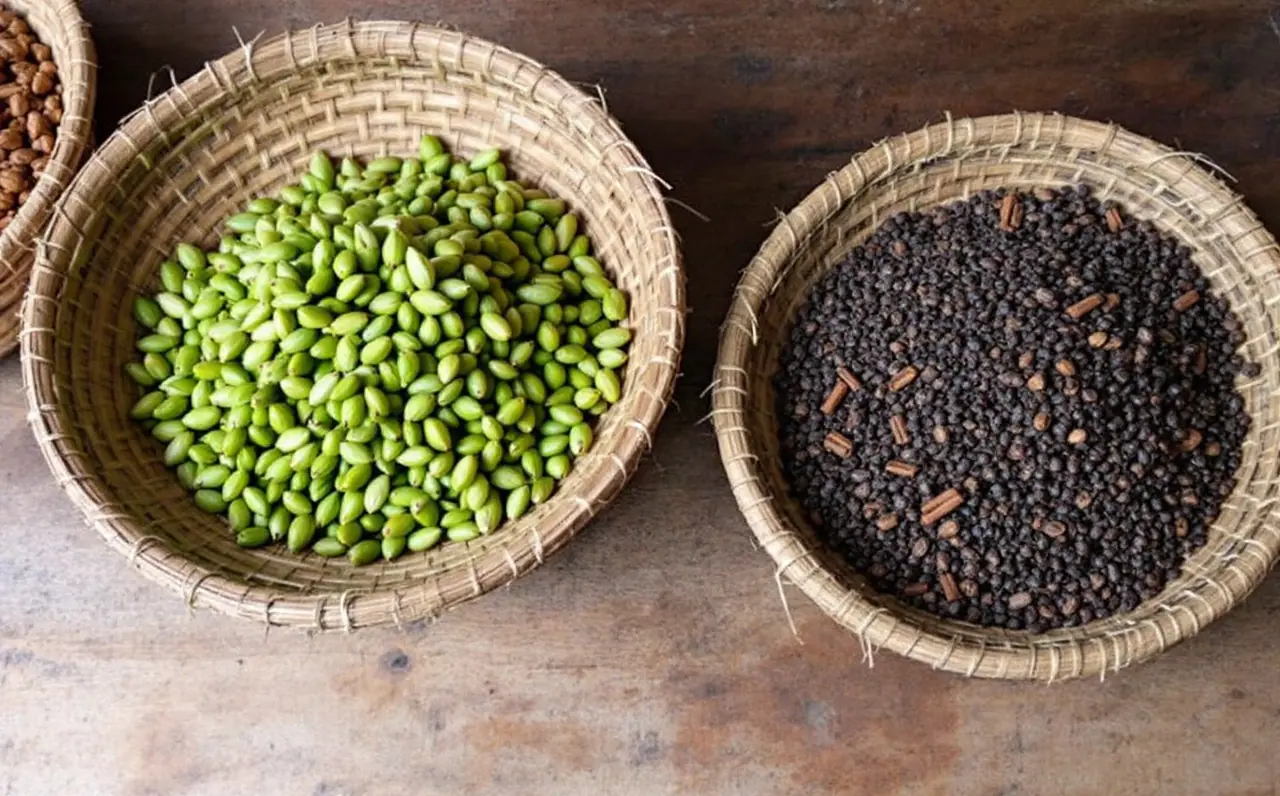
This is the time to look properly. Open a sack of cardamom if you are allowed, and pick out a pod. Good green cardamom is evenly green and smells strong as soon as you crack it. Pepper should be heavy and hard. Cinnamon from the hills is often the thin, papery quill rather than the thick bark sold elsewhere. If you want more detail on what good spice looks like, the earlier piece on cardamom, pepper and tea around Kumily has a checklist.
You will also see the trading side of the town: small offices with sample trays of cardamom in front, sacks being weighed, men studying the colour of a handful of pods in the light from the door. These are working businesses, not shops for visitors. Look from the doorway, and only go in if someone invites you.
How not to get pushed into a sale
Most pressure in Kumily is gentle, but it is still pressure. A few habits keep it in proportion. Decide before you go out roughly what you want, for example a small bag of cardamom, some pepper and one jar of something to try, and say so at the start. Ask to smell and open samples, and walk on if the answer is no. Ignore phrases like "special price only today" or "this grade is not sold to everyone", because nothing in a spice shop is that rare. Be wary when a driver, a tout or someone you met on the road insists on taking you to a particular shop: a commission is usually part of that arrangement and it ends up in your price. Do not accept claims that a product cures anything. And remember that saying "I will think about it" and leaving is completely normal here. Shopkeepers do it to each other all day.
Lunch and the middle of the day
Lunch is the main hot meal in many small eateries. A typical Kerala meal is rice with several vegetable dishes, sambar, a thin rasam, pickle, pappadam and buttermilk, sometimes served on a banana leaf. Fish fry or a fish curry is usually an extra. On the Tamil side of the menu, a meals plate might come with more lentils and a sharper tamarind taste. Eat with your right hand if you like, or ask for a spoon: nobody minds.
After lunch, the town slows. Some shops pull their shutters halfway, the heat sits on the road, and the sensible thing is to do the same. Read, drink tea, sleep. In the dry months from December to March this is the warm part of the day even at this height.
Late afternoon: walking routes
Kumily is small enough to cover on foot, and the walking is mostly along roads, so keep to the side and watch for buses and jeeps on the bends. A few walks I like:
- The main road from the bus stand towards Thekkady junction. This is the busiest stretch, with spice shops, eateries, handicraft stalls and the town's general bustle. Late afternoon, when tour groups have gone back to their hotels, is the pleasant time to walk it.
- Towards the border on the eastern side. The houses thin out and on a clear evening the land falls away towards Tamil Nadu. Do not walk down the ghat road itself: it is steep, narrow and full of heavy vehicles. If you want to see the drop, take a bus down to Lower Camp and back.
- The side lanes behind the market, where houses have pepper vines on their jackfruit and areca trees, cardamom drying on mats in the yard in season, and children coming home from school. Keep to the lane, do not walk into yards, and ask before photographing anyone.
Keep in mind that the reserve boundary is close to town. Elephants and other animals do come near the edges after dark. Walks in the late afternoon should end before dusk, and the piece on watching elephants at Periyar explains why the forest edge deserves care.
Evening: parotta, buses and a last tea
After dark Kumily is at its most social. The eateries fill up, the evening buses come in, and the tea stalls get busy again. This is parotta time. Kerala parotta is a flaky, layered flatbread made from a dough that is stretched thin, coiled and griddled, then crushed between the hands to loosen the layers. It goes with beef fry, chicken curry, egg roast or a vegetable kurma. It is rich, so one or two is plenty.
Toddy shops deserve a careful mention. They are licensed places that sell palm toddy, a mildly alcoholic drink, and many are known for very spicy food: tapioca with fish curry, fried fish, duck or beef dishes. In practice many are male spaces, though some have family seating. If you are curious, ask your host which are suitable, go with someone local if you can, and never drink before driving or walking these roads at night. The food is the real reason most people go anyway.
What to carry for the day
- A cloth bag for spices, so you are not given layers of plastic.
- A small umbrella, which works for both sun and rain.
- Cash in small notes for tea stalls and vegetable sellers.
- A water bottle you can refill where your homestay or eatery offers filtered water.
- A light layer for the evening, which can be cool even when the afternoon was warm.
The single best thing you can do in Kumily is order a second glass of tea at the same stall, late in the day, and stay long enough for the owner to start asking you questions.

Biju Abraham
Biju spent his childhood between Kumily and the cardamom estates further up the ridge. He writes about spice and tea country, hill towns, food and the people who live at the forest edge.
More from the same habitat
Choosing a homestay in spice country, from Kumily to the estates
Town, estate or forest edge: how to pick a homestay around Thekkady, Kumily and Vandanmedu, what to ask before you pay, and how to be a good guest.
Munnar or Vagamon: choosing a hill-town side trip from Thekkady
Tea slopes and Nilgiri tahr in busy Munnar, or pine woods and open meadows in quieter Vagamon. How to choose, with two-day plans and a side-by-side table.
Cardamom, pepper and tea around Kumily: how to read the plantations
How small cardamom grows under shade trees, why pepper climbs them, where tea takes over, and what to look for and ask on a plantation walk around Kumily.