
Spice & Tea CountryVisiting Responsibly
Munnar or Vagamon: choosing a hill-town side trip from Thekkady
Tea slopes and Nilgiri tahr in busy Munnar, or pine woods and open meadows in quieter Vagamon. How to choose, with two-day plans and a side-by-side table.
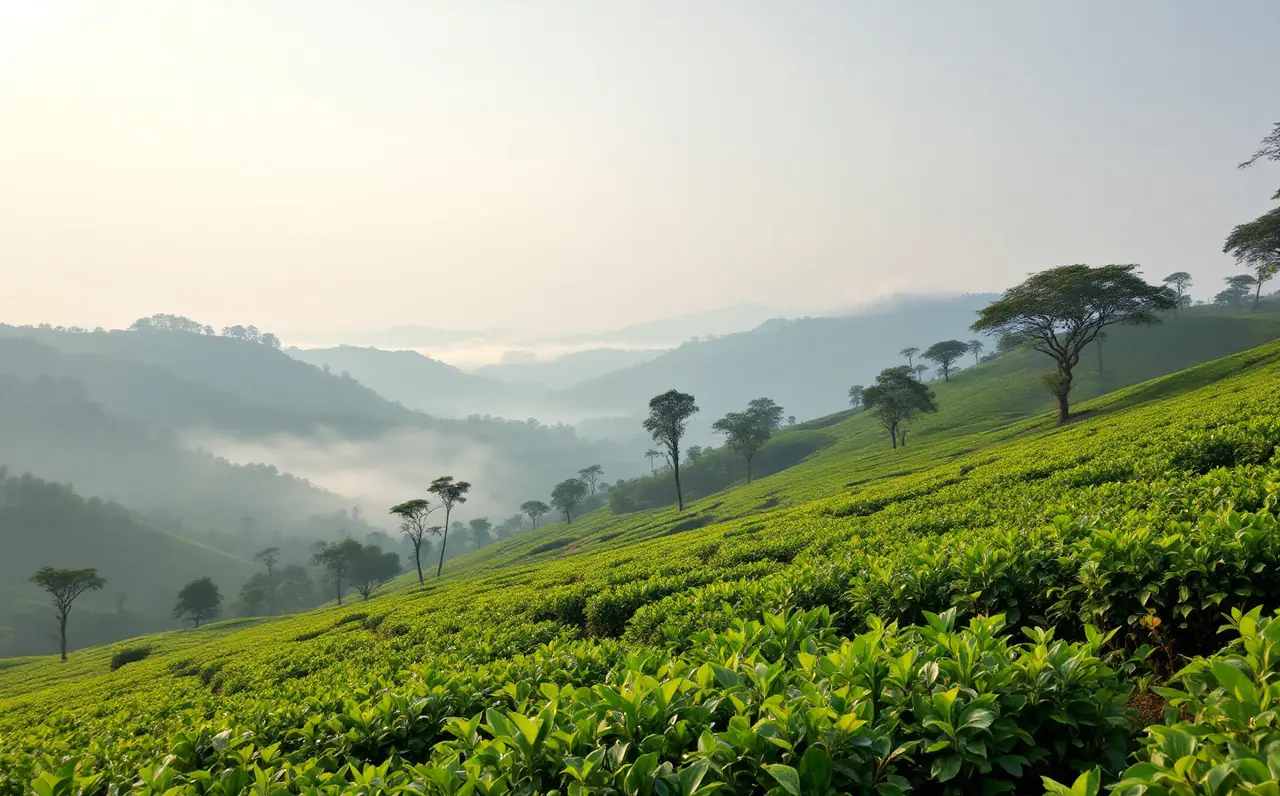
Once you have spent a few days around Thekkady, the hills start to pull you further. Two names come up in almost every homestay conversation about a side trip: Munnar and Vagamon. Both are hill towns in or beside Idukki district, both are cooler than Kumily, and both make a good change from forest and spice gardens. They are also quite different places, and choosing the wrong one for your mood can mean a tiring drive to somewhere that does not suit you.
I have pored over both routes with maps, bus timetables and far too many messages to homestay hosts, and what follows is how I would help a friend decide. Driving times are approximate and depend heavily on traffic, the route you take and the weather. Anything involving entry, timings or fees at parks and viewpoints is set by the people who run them and changes, so check official notices before you go.
The short version
Munnar is the bigger, better-known hill station: high tea country, the Nilgiri tahr of Eravikulam National Park, long views and a lot of other visitors. Vagamon is smaller and quieter: planted pine woods, rolling grassy meadows, a cooler kind of calm and fewer people outside holiday weekends. If you want the classic tea landscape and a real chance of seeing tahr, go to Munnar. If you want open space, a slower pace and an easier drive, go to Vagamon.
Munnar: tea, tahr and the high ranges
Munnar sits higher than Thekkady, at roughly 1,600 metres, where several mountain streams meet. The drive from Thekkady is usually around three to four hours by road, depending on traffic and the route, and much of it runs through cardamom estates before tea takes over on the higher slopes. That is the main reason I would not try Munnar as a day trip. You spend most of the day in the car and arrive tired, in time for the busiest hours.
What draws people
The tea estates are the first thing you notice. Whole hillsides are clipped into neat green rows, broken by shade trees, estate roads and the occasional workers' settlement. Tea has been grown here since the colonial plantation era, and there is a tea museum in the area that explains how the leaf is processed. If you have already visited spice gardens near Kumily, seeing the tea country makes a good second chapter; the piece on cardamom, pepper and tea around Kumily covers how the three crops fit together.
The second draw is Eravikulam National Park, a high plateau of shola forest and grassland of roughly 97 square kilometres on the edge of town. Anamudi, at about 2,695 metres the highest peak in south India, rises inside the park. Eravikulam is best known for the Nilgiri tahr, an endangered mountain goat found only in the southern Western Ghats, and the park holds one of its largest populations. In the part of the park open to visitors, the tahr are used to people and often graze in plain view. Please keep your distance and follow the staff's instructions anyway. For the natural history, the piece on Nilgiri tahr and the shola grasslands is a good companion read.
One important detail: the park usually closes to visitors for part of the year during the tahr calving season, typically for a stretch somewhere between late January and April. The exact dates are announced by the forest department each year, so check the Kerala Forest Department or local news before planning a trip around it.
Munnar's hills are also known for neelakurinji, a shrub that flowers en masse roughly once every twelve years and turns the slopes blue-violet. The last big bloom on the Munnar hills was in 2018, so it will not be part of most trips for a while.
What to expect
Munnar is popular and it shows. On weekends, holidays and in the Christmas and summer seasons, the roads to the well-known viewpoints, dams and lakes can be slow, and the town centre is congested. Go early, travel midweek where you can, and be choosy rather than trying to tick off every stop.
Vagamon: pines, meadows and quiet
Vagamon lies on the border of Idukki and Kottayam districts, at roughly 1,100 metres. It is a smaller place with less development, and much of its appeal is simply walking out into open country. From Thekkady the drive is usually around two hours by road, sometimes a little longer depending on the route, the weather and how often you stop. That makes a day trip possible, though an overnight stay is much more relaxing.
What draws people
The meadows are the heart of Vagamon: rolling grass-covered hills with views over lower valleys, often with cloud drifting across them. There is also a planted pine forest, tall straight trees with a soft floor of needles, which feels unexpectedly northern for Kerala and is popular with photographers. Several hilltops have a long religious history: Kurisumala, with its monastery and hilltop cross, Thangal Para, a Muslim pilgrimage site, and a hill temple at Murugan Mala. Locals sometimes describe these three as a sign of how different communities share the same hills.
Vagamon is also one of the places in Kerala where paragliding happens commercially, using the slopes and the wind off the valleys. I am not going to recommend an operator. If you are interested, ask careful questions about training, equipment and safety records, check whether flights are running in the current weather, and walk away if anything feels rushed.
What to expect
Outside holiday weekends, Vagamon is calm. Facilities are simpler than in Munnar, and you will find fewer restaurants and fewer big hotels, which is exactly the point for many people. The weather turns quickly. Mist can close in on the meadows within minutes, and the grassy slopes become slippery after rain, so wear shoes with grip and stay back from steep drops.
A side-by-side comparison
| Munnar | Vagamon | |
|---|---|---|
| Approximate drive from Thekkady | Usually around three to four hours by road, depending on traffic and the route | Usually around two hours by road, depending on the route and weather |
| Altitude | Roughly 1,600 metres | Roughly 1,100 metres |
| Main scenery | Tea estates, high grassland, dams and lakes | Pine woods, open meadows, valley views |
| Wildlife | Nilgiri tahr at Eravikulam, shola birds | Mostly birds and the meadow life; few large mammals |
| Crowds | Busy, especially on weekends and holidays | Quieter, but busy on long weekends |
| Works as a day trip | Not really | Possible, better with one night |
| Best for | First-time visitors to Kerala's hills, tea lovers, tahr | Slow travellers, walkers, families wanting space |
| Main caution | Eravikulam calving closure, traffic | Fast-changing mist, slippery slopes |
A sample two days in Munnar
Day one
- Early morning: leave Thekkady after breakfast to beat the traffic.
- Late morning: arrive and check in, then a slow walk along a quiet estate road near where you are staying, looking at the tea and listening for birds.
- Afternoon: visit the tea museum or a factory that receives visitors, to see how green leaf becomes tea.
- Late afternoon: a viewpoint drive on one road only, chosen with your host's advice, and back before dark.
- Evening: an early night, because you want to be up for the park.
Day two
- Early morning: go to Eravikulam as soon as it opens (if it is open that season), to see the tahr and the grasslands before the crowds and cloud build.
- Late morning: coffee in town and a short walk.
- Afternoon: begin the drive back to Thekkady, stopping for lunch on the way.
- Evening: back in Kumily before dark.
A sample two days in Vagamon
Day one
- Mid-morning: leave Thekkady at an unhurried pace.
- Midday: arrive in time for lunch.
- Afternoon: walk the meadows while the light is good, with a rain shell in your bag.
- Late afternoon: the pine forest, which is at its most atmospheric when mist moves through it.
- Evening: a quiet dinner and stars if the sky is clear.
Day two
- Early morning: walk up one of the hilltops, such as Kurisumala, starting early to beat the heat and the visitors.
- Late morning: a slow breakfast, then a final walk on the meadows.
- Afternoon: drive back to Thekkady, arriving well before dark.
Who should choose which
Choose Munnar if this is your first time in Kerala's high country and you want to see the tea landscape properly, if you are keen to see Nilgiri tahr, or if you like having plenty of choice for food and places to stay. Avoid it as a day trip and avoid the busiest holiday weeks if you can.
Choose Vagamon if you want to walk, breathe and not queue, if you are travelling with children who need room to run, or if you have only one free day and do not want to spend it in the car. It is also the better pick if you are tired of being in a crowd.
If you have four days spare instead of two, you can do both, but leave at least one quiet day in Thekkady between them. For help choosing which season suits each, the month-by-month guide to Thekkady applies broadly to both towns, with one extra point for Munnar: check the Eravikulam closure dates before you fix anything, because they decide whether the tahr are part of your trip at all.

Sneha Kurien
Sneha plans trips the slow way, with bus timetables, rain forecasts and too many homestay messages. She writes about seasons, getting around the hills and travelling with family.
More from the same habitat
Choosing a homestay in spice country, from Kumily to the estates
Town, estate or forest edge: how to pick a homestay around Thekkady, Kumily and Vandanmedu, what to ask before you pay, and how to be a good guest.
Ethical wildlife viewing in Indian forests
Plain rules of thumb for watching wildlife in Indian forests and reserves: distance, noise, food, night lights, bird calls, geotags and elephants on the road.

What to pack for the Western Ghats
Muted clothes, leech socks, a rain shell, 8x42 binoculars and a dry bag for everything: a practical packing list for four days in the Kerala hills and forests.